
31 Jan 2026
Malaysia
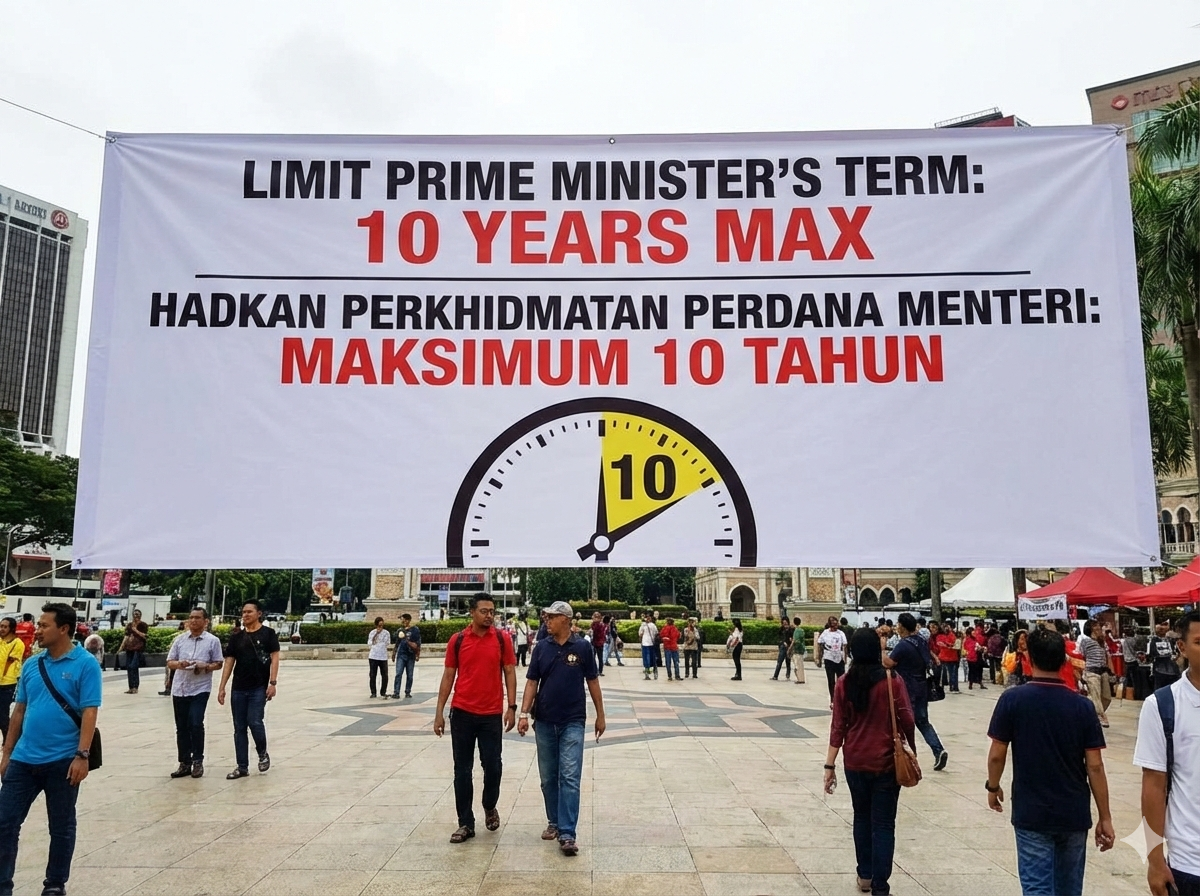
Cabinet agrees: Limit Prime Minister's term to 10 years
Listen to article
Newsenz Official
This did not come with street protests, dramatic speeches, or political theatrics. Yet it may prove to be one of the most consequential governance decisions Malaysia has made in decades.
The government’s agreement to limit the Prime Minister’s term to 10 years marks a structural shift in how power is exercised in this country. It is not about personalities. It is about rules.
For a nation long shaped by strongman politics, this matters. The Cabinet has agreed in principle to introduce a two-term limit for the Prime Minister, capping the position at 10 years in office .
This commitment will require constitutional amendments and parliamentary approval, meaning it is neither symbolic nor automatic. It must pass the test of institutions.
That is precisely why it is important.
Malaysia’s political history has shown what happens when executive power accumulates without a clear endpoint. Long tenures blur the line between leadership and entitlement. Institutions weaken. Succession becomes destabilising.
Accountability erodes quietly, then suddenly. A term limit changes that logic. It introduces predictability into leadership transition.
It lowers the political temperature around succession. It reduces incentives to personalise power and instead strengthens the role of institutions, policies, and teams. Most importantly, it signals that no individual is larger than the system.
This is not a revolutionary idea globally. Many mature democracies impose limits on executive power precisely because democracy is healthiest when leadership renewal is built into the system.
What makes this moment significant is that Malaysia is choosing to do this from within, not under crisis or external pressure.
Critics will argue that good leaders should not be forced out by arbitrary timelines. That argument misses the point.
Term limits are not a judgment on performance. They are a safeguard against concentration of power, even when intentions are good.
Others will question whether this reform will survive future political shifts. That is a fair concern. Which is why the real test is not today’s announcement, but whether Parliament follows through with constitutional change and whether future governments respect it.
Still, context matters. This proposal comes at a time when Malaysia is actively rebuilding institutional credibility, restoring investor confidence, and repairing governance norms weakened over the past decade.
From fiscal discipline to anti-corruption efforts to economic diplomacy, the underlying theme has been institutional repair rather than political showmanship. Limiting the Prime Minister’s tenure fits squarely within that trajectory.
From fiscal discipline to anti-corruption efforts to economic diplomacy, the underlying theme has been institutional repair rather than political showmanship. Limiting the Prime Minister’s tenure fits squarely within that trajectory.
It tells markets, civil servants, and citizens the same thing. Malaysia is serious about rules over personalities. About systems over saviours. About stability over spectacle.
This reform will not solve inflation, raise wages, or fix public services overnight. But it addresses something more fundamental. The architecture of power itself.
In politics, the most important reforms are often the least dramatic. They reshape behaviour quietly, over time, by changing incentives.
A 10-year limit on the Prime Minister does exactly that.
If implemented fully, it will be remembered as a moment when Malaysia chose to constrain power while it still could, rather than after it was abused.
Join the conversation
Comments
Login to join the conversation
No comments yet. Be the first to say something!