
17 Apr 2026
Malaysia
Malaysia Is Quietly Getting Diversity Right
Listen to article
Newsenz Official
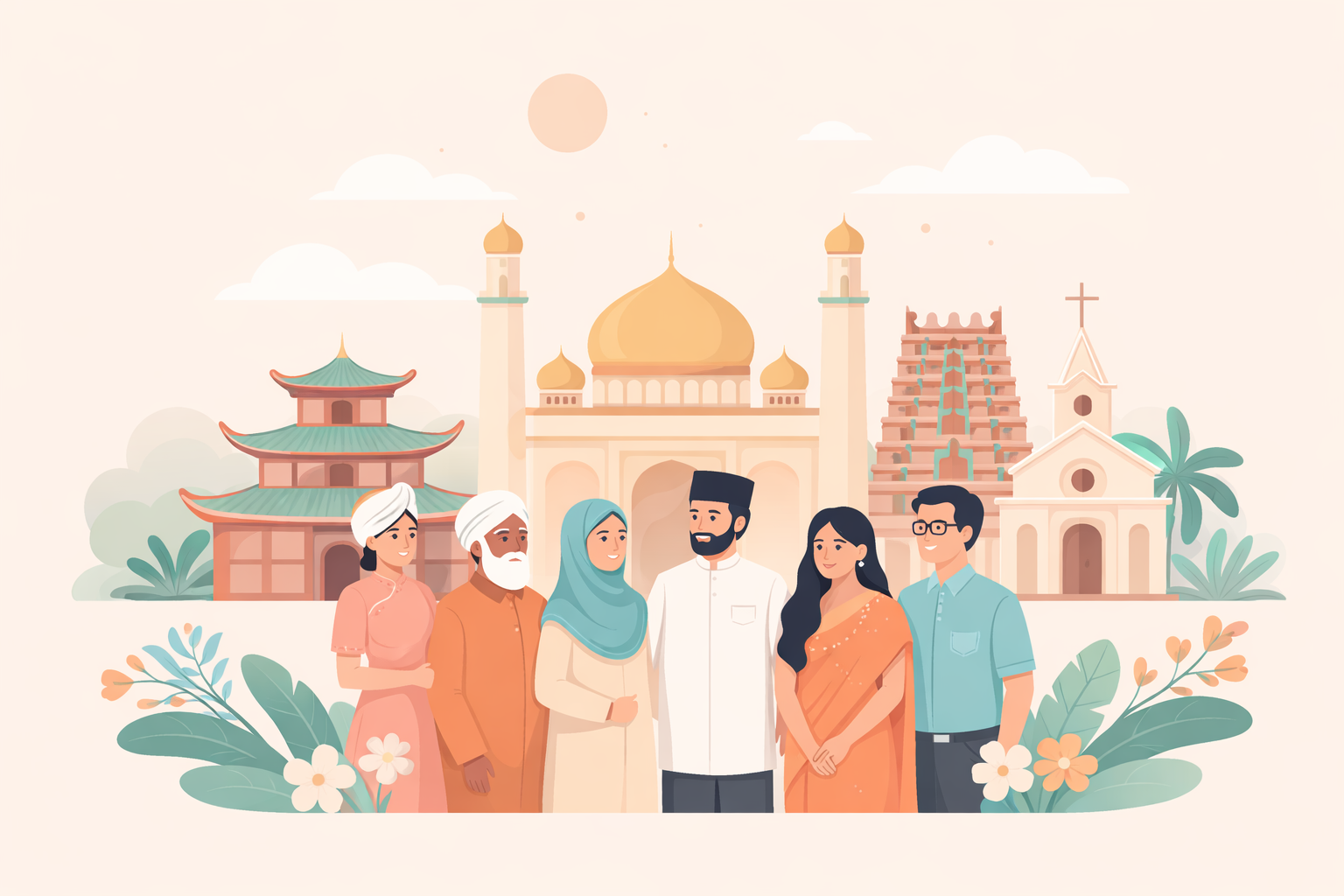
It is a question that rarely makes headlines, yet quietly lingers in the minds of many: do non-Muslims truly belong in Malaysia?
In a country shaped by diversity, faith is deeply personal. So is the sense of belonging. For some, that sense feels secure. For others, it comes with moments of doubt, shaped by public debates, isolated incidents, or shifting political narratives.
Yet, step back from the noise, and a different picture begins to emerge.
Malaysia today is ranked 13th among most peaceful nations globally, according to the Institute for Economics and Peace through its Global Peace Index. That standing reflects a society where coexistence remains the dominant reality.
In a country shaped by diversity, faith is deeply personal. So is the sense of belonging. For some, that sense feels secure. For others, it comes with moments of doubt, shaped by public debates, isolated incidents, or shifting political narratives.
Yet, step back from the noise, and a different picture begins to emerge.
Malaysia today is ranked 13th among most peaceful nations globally, according to the Institute for Economics and Peace through its Global Peace Index. That standing reflects a society where coexistence remains the dominant reality.
Building Harmony Through Policy and Action
Peace does not sustain itself. It is built through policy, reinforced through institutions, and sustained by everyday decisions.
In recent years, one of the clearest signals of this commitment has come through the preservation and support of non-Muslim places of worship. Since 2023, the Housing and Local Government Ministry, led by Minister Nga Kor Ming, has channelled RM200 million towards more than 1,000 non-Muslim houses of worship nationwide.
This is more than funding. It is a structural affirmation.
Across the country, heritage sites and community anchors are being restored. The Butterworth Tian Fu Gong temple, the Taiping Chinese Methodist Church, and temples in towns like Teluk Intan stand as examples of continuity being actively preserved.
In recent years, one of the clearest signals of this commitment has come through the preservation and support of non-Muslim places of worship. Since 2023, the Housing and Local Government Ministry, led by Minister Nga Kor Ming, has channelled RM200 million towards more than 1,000 non-Muslim houses of worship nationwide.
This is more than funding. It is a structural affirmation.
Across the country, heritage sites and community anchors are being restored. The Butterworth Tian Fu Gong temple, the Taiping Chinese Methodist Church, and temples in towns like Teluk Intan stand as examples of continuity being actively preserved.
From Tension to Resolution on the Ground
Equally important is how these efforts are carried out. The process is often quiet and grounded. Engagement with temple committees. Dialogue with church leaders. Coordination with state authorities.
When issues arise, particularly around land status, permits, or compliance, the approach leans towards resolution.
This method transforms potentially divisive disputes into opportunities for cooperation. Legal complexity becomes manageable through administrative solutions.
This reinforces a principle central to Malaysia’s stability: harmony is maintained through engagement, not distance.
At the constitutional level, the foundation remains firm. Freedom of religion is enshrined and protected, and current policies continue to reinforce this through implementation.
A Nation Still Being Built, Together
Malaysia’s identity has always been layered. It is a Muslim-majority country, while also being home to multiple traditions that have taken root over generations.
The more relevant question today is whether Malaysia is strengthening the conditions that make belonging visible and tangible. The evidence suggests it is.
Progress may not be even everywhere, and perception does not always move at the same pace as policy. Yet the direction is clear: institutions managing complexity, policies recognising diversity, and leadership engaging communities.
Minister Nga's remark, “Tiada yang tertinggal, tiada yang terpinggir,” carries weight when it is reflected in real outcomes.
Belonging, in Malaysia, is not static. It is something continuously shaped and strengthened. And by many measures, it is moving forward.
Join the conversation
Comments
Login to join the conversation
No comments yet. Be the first to say something!