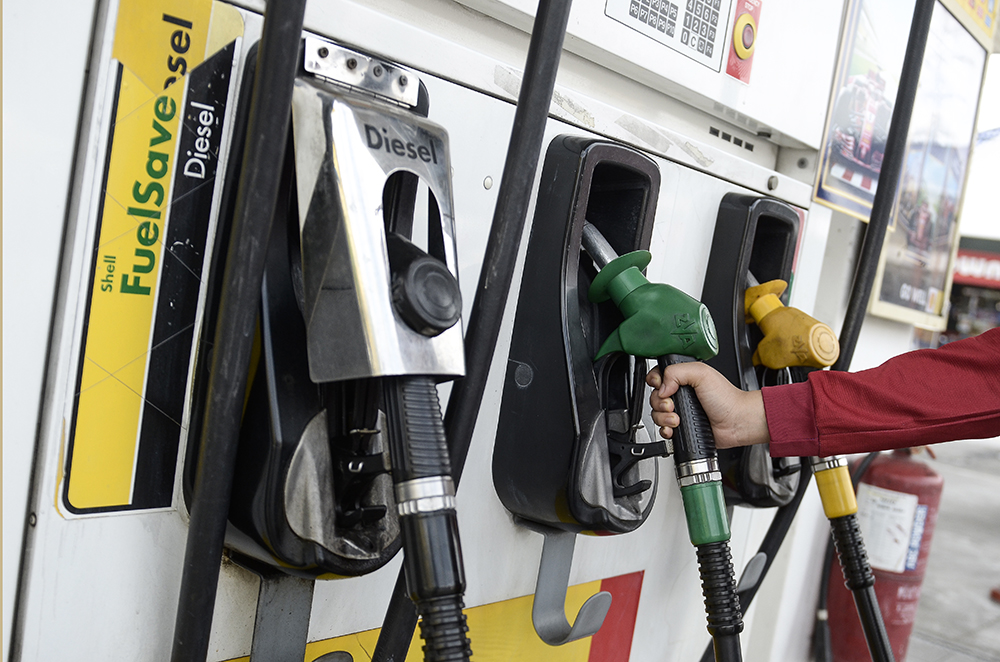
Should the 'rich' keep enjoying cheap petrol? That’s the question currently dividing Malaysians.
Why should high-income T20 earners continue receiving BUDI95 fuel subsidies when so many families are struggling with the rising cost of living? This issue has sparked intense debate across the country.
Prime Minister Anwar Ibrahim’s National Economic Action Council has tabled a major proposal to withdraw or rationalise fuel subsidies for the high-income T20 group under the BUDI95 initiative. The government is currently refining the details of this plan.
Economists estimate that removing subsidies for the T20 alone could save the government up to RM1.5 billion every month — equivalent to RM18 billion a year. This substantial amount could be redirected to critical areas such as healthcare, infrastructure development, and more targeted direct aid for lower-income B40 and M40 families.
On the surface, the proposal appears perfectly reasonable. Why should households earning well above RM12,000 a month continue to enjoy subsidised RON95 petrol at under RM2 per litre when the true market price is significantly higher? Public sentiment is growing stronger by the day. Many Malaysians argue that the rich don’t need BUDI95 — they can comfortably afford market rates without government support.
However, the issue is far more complicated than it first appears.
Many in the T20 group are pushing back against the planned cuts. They argue that crossing the T20 income threshold does not automatically mean an easy or luxurious life. High housing costs, car loans, children’s education expenses, medical bills, and rising living costs in major cities have left even upper-middle-income families feeling financially squeezed. Some also highlight that T20 households are already among the biggest contributors to income tax revenue in the country.
The T20 category itself is very broad. A double-income professional couple in Kuala Lumpur earning RM13,000 per month may face vastly different realities compared to a similar household in a smaller town. Urban cost of living varies dramatically across Malaysia, and a simple income cut-off does not always reflect actual financial pressure and commitments.
Geography adds yet another important layer to the debate. In Sabah and Sarawak, vast distances, limited public transportation, and heavy reliance on road travel for work and essential services make fuel a critical need rather than a luxury. A uniform national policy risks disrupting daily life and slowing economic activity in these regions, where alternatives to private vehicles are scarce.
The government is proceeding with caution. It is still studying the best approach — whether to target the full T20, or narrower bands such as T15, T10, or even T5.
Whatever decision is eventually made, one thing is clear: a poorly designed cut could create new hardships for families who are far from wealthy. In Malaysia’s current economic climate, getting subsidy reform right is critical. It must carefully balance fiscal responsibility with social fairness and economic reality.
What are your thoughts? Should the T20 lose their fuel subsidy completely?
Stay informed, stay ahead.
Join the conversation
Comments
Login to join the conversation
No comments yet. Be the first to say something!
Join the Conversation
Log in or create an account to like, comment, and share posts.