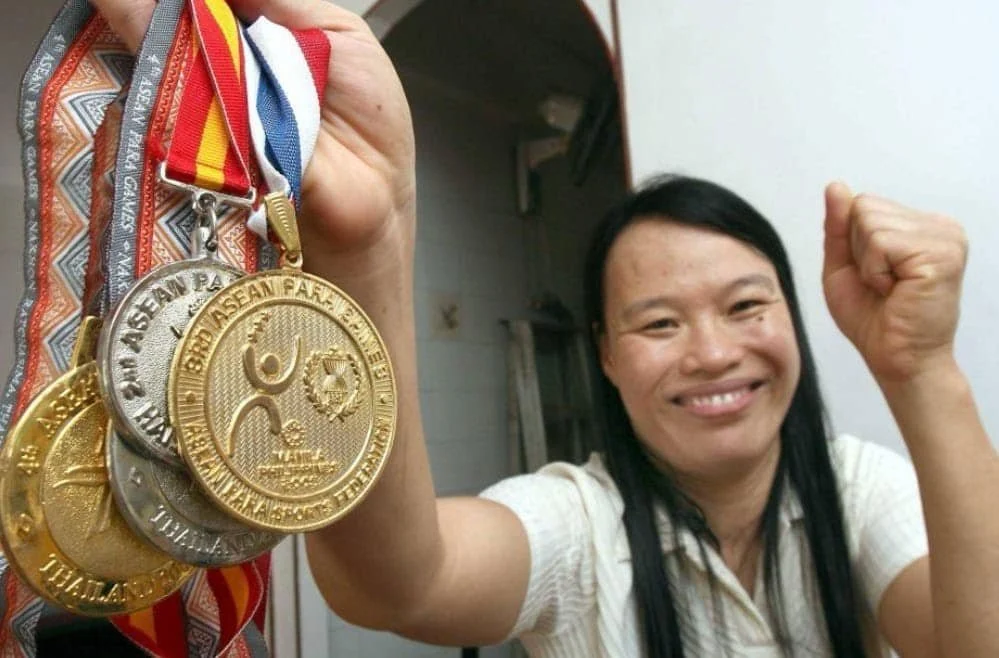
What happens to our athletes when the medals stop coming and the cheering fades away?
Listen to article
Newsenz Official
In recent news, Ann Pow, a 30-year-old Malaysian triathlete, has just made history. She became the first Malaysian woman to complete the brutal 2026 Australian Super Ironman Triathlon — a three-day, 515.4km ultra-endurance race consisting of a 10km swim, 421.1km cycling, and an 84.3km run (equivalent to two full marathons).
Her remarkable achievement has sparked celebration across the nation. From triathlons to para-sports, more Malaysians are pushing boundaries on the international stage, and that is something we should all take pride in.
Yet, while we celebrate our current heroes, we must also confront a harder reality: What happens to Malaysian athletes once their careers end?
Will they be remembered and supported like Datuk Lee Chong Wei, or will they risk being forgotten?
In the case of former Paralympic swimmer Koh Lee Peng. A multiple gold medallist at the ASEAN Para Games and once named Penang’s Best Paralympic Sportswoman, Koh was reportedly seen in a recent video crying while selling tissues at Bukit Bintang in Kuala Lumpur.
The image triggered public outrage, with many netizens strongly criticising the government for alleged negligence and abandonment.
However, the full picture deserves a fair look. In 2023, the National Athletes Welfare Foundation (Yakeb) denied claims of neglect, stating that assistance had been offered to Koh, which she reportedly declined.
Furthermore, the government has committed since 2016 to providing lifetime pensions for past Paralympic medallists. Koh reportedly receives RM450 per month, while clearly insufficient to cover rent in Kuala Lumpur or maintain a motorised wheelchair, proves that a support system does exist. The government has not simply walked away.
Malaysia has indeed made commendable progress in athlete welfare compared to the past. The establishment of Yakeb, the introduction of lifetime pensions, and various skills-training initiatives are steps in the right direction.
For Paralympians, who face higher medical and mobility costs, the government has also increased awareness and outreach efforts. Koh’s case, while deeply unfortunate, is not a simple story of state abandonment. It is a reminder that support must be proactive, tailored, and dignified.
The government itself has acknowledged these gaps and shown willingness to improve. With continued collaboration between policymakers, NGOs, and the private sector, Malaysia can ensure that no athlete ever feels they have no choice but to sell tissues on a street corner.
As we celebrate Ann Pow today, let us also remember that no system is perfect.
The government has been quietly strengthening the athlete welfare framework year by year, raising pensions gradually, expanding job placement programmes, and working with Yakeb to offer transition support. They are trying their best without burning a hole in the national pocket.
For a developing nation balancing countless priorities, that steady, realistic effort deserves recognition, not relentless criticism. That is the kind of sustainable care our athletes truly need in the long run.
Join the conversation
Comments
Login to join the conversation
No comments yet. Be the first to say something!
Join the Conversation
Log in or create an account to like, comment, and share posts.