
23 May 2026
Tech
The GPU and RAM Shortage: When Monopoly Meets Its Match
The fever dream of an arms race
Listen to article

If you're a PC gamer, the past few months have felt like a nightmare. For the past two years, buying a graphics card or a stick of RAM has felt like negotiating with hostage-takers.
First came the pandemic. Then crypto miners swept up every available GPU. Just when that nightmare faded, Artificial Intelligence arrived. Suddenly, every data center on the planet needed massive amounts of memory, and regular consumers were pushed to the back of the line.
The result? Scalpers had a field day. Prices soared, crashed, then soared again. A mid-range graphics card that should cost RM2,500 would appear on secondary markets for RM5,000. RAM kits doubled in price practically overnight.
And behind all of this stood an uncomfortable truth: South Korea's Samsung and SK Hynix control roughly 80 percent of the global DRAM market. When two companies hold that much power, they set the rules. Everyone else pays up.
The data center hunger
What changed this time was not just greed, but structural demand. AI servers need High Bandwidth Memory (HBM), which eats up about three times the wafer capacity of standard RAM.
So the Korean giants shifted production away from consumer memory to serve the booming AI industry. Supply to regular buyers dried up. TrendForce estimated DRAM contract prices rose nearly 60 percent in a single quarter of 2026. Scalpers, sensing blood, automated their hoarding. Real gamers and PC builders were left with empty shelves and maxed-out credit cards.
South Korea, meanwhile, was not exactly crying. Samsung and SK Hynix posted record profits. But strategically, the country is in a fragile position. It has become dangerously dependent on two chaebols and a US-driven tech boom that could shift anytime.
Worse, the rest of the world has taken notice. No country wants to be held hostage by a memory duopoly forever.
Breaking the chokehold
That is why recent developments are genuinely worth celebrating. Several nations, most notably China, have accelerated their own RAM and GPU development. On the GPU side, Lisuan Technology has released a competitive gaming GPU on a 6nm process, capable of running Cyberpunk 2077. It is not an Nvidia killer yet, but it proves that independent design is possible.
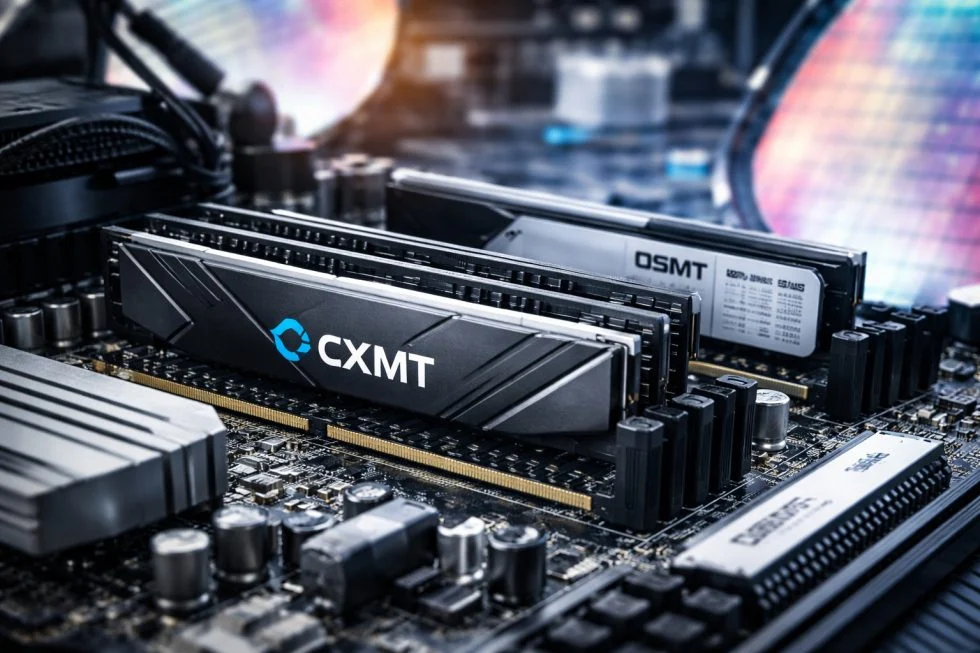
On the memory front, ChangXin Memory Technologies (CXMT) is projected to capture over 11 percent of global DRAM market share by 2026, becoming the world's fourth-largest DRAM maker. These are not clones. They are genuine innovations built on domestic supply chains.
A future without monopoly pricing
Will this fix the shortage overnight? No. Advanced packaging for HBM will keep AI server prices high for another year or two. But for the average consumer looking for a DDR5 kit or a decent gaming card, relief is finally in sight.
When third-party manufacturers offer real alternatives, the cartel-like pricing power of the Korean duopoly begins to crack. Competition returns. Prices fall.
It has been a long, painful wait. But watching the monopoly break apart, piece by piece, is a sight worth sticking around for.
Join the conversation
Comments
Login to join the conversation
No comments yet. Be the first to say something!