
25 May 2026
Malaysia
Malaysia’s Navy Crisis: Billions Spent. Ships Delayed. Missiles Cancelled. Who Is Actually Accountable?
Six Ships Were Promised. Years Later, The Navy Is Still Waiting.
Listen to article
Newsenz Official
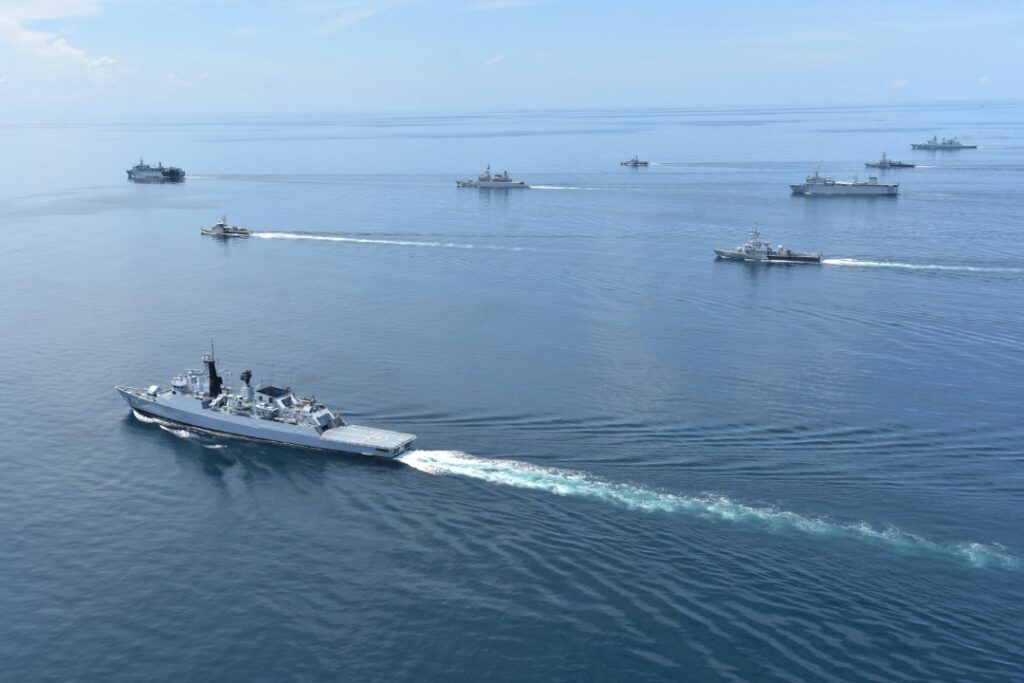
The Royal Malaysia Navy’s Littoral Combat Ship was once sold as the future of Malaysia’s maritime defence.
Six advanced warships. Modern combat systems. Stronger deterrence in the South China Sea. A major leap forward for a maritime nation surrounded by strategic waters.
Instead, it became one of Malaysia's most controversial defence failures.
Not one ship was delivered on its original schedule. Cost ballooned into billions. Deadlines just shifting. Governments changed. Yet the navy remained stuck operating ageing vessels that should have been replaced years ago.
How does a country spend billions on defence and still struggle to produce operational warships?
The Project That Became a National Embarrassment
Approved during the Barisan Nasional administration, the Littoral Combat Ship project was originally meant to deliver six advanced warships capable of strengthening Malaysia’s maritime defence posture in increasingly contested regional waters.
Instead, the program spiralled into years of delays, ballooning costs, restructuring exercises, and public controversy.
Today, not a single ship has entered full operational service on its original timeline.
Even in 2026, the first vessel, KD Maharaja Lela, is still facing delays. The Defence Ministry recently confirmed that commissioning has once again been pushed back after earlier deadlines were missed.
The irony is difficult to ignore. Malaysia has already spent billions of ringgit on the project, yet the navy is still forced to rely heavily on ageing vessels that should have been replaced years ago.
But this crisis cannot simply be blamed on one administration.
The project began under BN. Delays deepened during the Muhyiddin administration. Problems continued under Ismail Sabri. Every government promised recovery. Every government inherited a bigger problem than the last.
The result is a defence program that increasingly reflects a broader Malaysian governance issue: a political system unable to sustain long-term planning.
Politics Cannot Build a Navy Election by Election
Defence modernisation is not something that can be completed within one election cycle. Naval procurement requires continuity across decades. Ships take years to design, build, integrate, test, and deploy.
Yet Malaysian politics has increasingly revolved around short-term survival — coalition collapses, cabinet reshuffles, shifting alliances, and constant political uncertainty.
From 2018 onward, Malaysia experienced repeated political instability. Governments rose and fell in rapid succession. Cabinets changed. Priorities shifted. Long-term strategic planning suffered.
Malaysia sits at the centre of one of the world’s most strategically important maritime regions. The country depends heavily on the Strait of Malacca, one of the busiest shipping routes on Earth.
It also faces growing strategic pressure in the South China Sea, while Sabah’s eastern waters continue facing piracy, smuggling, and cross-border security threats.
Malaysia Built a Fragmented Fleet Instead of a Unified One
One of the least discussed issues behind Malaysia’s naval struggles is fleet fragmentation.
Over the decades, Malaysia accumulated military systems from multiple countries. French combat systems. British ship concepts. German submarines. Chinese-built vessels. Italian naval guns. Swedish radar systems. Turkish missile platforms alongside various American technologies.
On paper, diversification sounds strategic.
In reality, it creates operational chaos.
Different systems require different maintenance ecosystems, separate training programs, incompatible logistics chains, unique spare parts, and specialised technical expertise.
Instead of building a streamlined fleet, Malaysia accumulated layers of expensive complexity.
Every new platform added another logistical burden.
Everything costs more. Repairs take longer. Training becomes more difficult. Maintenance becomes more fragile.
Instead of building a unified navy, Malaysia built a collection of expensive headaches.
The Submarine Program Revealed the Hidden Cost of Prestige
The submarine program illustrates this problem perfectly.
Malaysia’s Scorpène-class submarines were once promoted as symbols of modernisation and strategic prestige. But over time, maintenance costs, operational downtime, foreign dependency, and procurement controversies damaged public confidence in the program.
Submarines are among the most technically demanding military assets in existence. They require constant maintenance cycles, highly specialised crews, advanced dockyard support, and stable long-term funding.
The issue was never whether submarines are strategically useful. They absolutely are. Submarines provide deterrence, intelligence gathering, and strategic depth that surface ships cannot easily replicate.
The problem is whether Malaysia built the institutional and industrial capacity necessary to sustain them properly over decades.
Recent developments show how expensive that challenge remains. The government recently approved another massive maintenance and repair contract for the submarine fleet while overhaul negotiations continue.
The Missile Problem Exposed Another Weakness
Modern naval warfare no longer depends only on ships. Combat capability depends heavily on missile integration, radar coordination, electronic warfare systems, and networked operations.
Malaysia’s navy has repeatedly struggled with delayed missile integration and procurement complications.
The latest example became internationally embarrassing.
Malaysia’s planned Naval Strike Missile system for the Littoral Combat Ship program was disrupted after export approvals were reportedly revoked despite Malaysia already making major payments under the contract.
The cancellation forced Malaysia to reconsider missile integration plans while raising serious questions about procurement reliability and strategic planning.
This means the navy is not only dealing with delayed ships. It is also facing uncertainty over whether key weapons systems can even be fully integrated on schedule.
A warship without its intended missile system is not truly operating at full capability.
And that turns delays into operational vulnerabilities.
More Ships Are Being Ordered, But Public Confidence Remains Weak
Malaysia is currently acquiring additional littoral mission ships from Türkiye, continuing offshore patrol vessel programs, maintaining submarine upgrades, and pursuing broader fleet modernisation under the navy’s “15-to-5 Transformation Programme.”
In theory, the plan makes sense.
Instead of operating a confusing mix of ageing platforms, the navy aims to streamline operations into fewer standardised ship classes. The goal is to reduce maintenance complexity, simplify logistics, lower operational costs, and improve readiness.
Billions Were Lost, But Accountability Never Arrived
This is where the conversation becomes uncomfortable.
After billions spent and years lost, almost nobody appears to have faced meaningful consequences.
Projects are restructured. Timelines revised. Committees formed. But the broader system continues functioning almost exactly the same way.
Contractors continue receiving opportunities. Decision-makers move into new positions. Political responsibility becomes diluted across multiple administrations.
A country can buy advanced ships, submarines, missiles, and radar systems. But if procurement remains politicised, oversight remains weak, planning resets every time governments change, and accountability disappears once scandals emerge, modernisation will continue producing expensive underperformance.
The Real Question Is Whether Malaysia’s Political System Can Deliver
That is why simply demanding “more defence spending” misses the point entirely.
Malaysia does not only need more funding. It needs transparent procurement, stronger parliamentary oversight, long-term bipartisan defence planning, fewer fragmented systems, and procurement decisions based on operational logic rather than political convenience.
Because ultimately, the issue is no longer whether Malaysia wants a modern navy. Almost everyone agrees it does.
The real question is whether Malaysia’s political system is capable of building one — and sustaining it without collapsing under its own dysfunction.
Until that changes, Malaysia’s defence announcements will continue sounding impressive on paper while operational reality struggles to catch up.
Join the conversation
Comments
Login to join the conversation
No comments yet. Be the first to say something!