
28 May 2026
Malaysia
Lost on Malaysia’s Hills: Two Deaths in One Week Expose a Harsh Truth
When hikers treat unmarked slopes like public parks, tragedy is only a wrong turn away.
Listen to article
Newsenz Official
On May 23rd, a 19‑year‑old woman went missing on Bukit Changkat Asa. Four days later, rescuers found her body just 500 metres from where she was last seen.
Before the week ended, a 49‑year‑old woman vanished on Gunung Batu Putih in Perak. She had been trekking the Trans Spencer Chapman trail, suffered a leg injury, but continued uphill alone. A guide last saw her Sunday morning. Only her water bottle has been found.
Two mountains. Two missing persons. One week. And a question we keep dodging: are we treating Malaysia’s hills like public parks when they are anything but?
An Unofficial Trail with No Safety Net
Bukit Changkat Asa is not a gazetted government recreational site. There are no official signboards, no rescue facilities, no emergency contact points. It is an informal trail, maintained by nothing more than public habit.
That does not make it illegal to hike there. But it does mean no government agency is responsible for marking the path, clearing landslide debris, or providing any form of safety infrastructure.
When a hiker walks 500 metres off‑trail on an unmarked mountain, that is not necessarily a “search and rescue failure.” It is a geography problem multiplied by exhaustion, dehydration, and poor visibility.
In many cases, the difference between being found and staying lost is a single wrong turn taken when energy is low.
A G8 Mountain with a False Sense of Security
Now contrast that with Gunung Batu Putih. Unlike Changkat Asa, this mountain is a government‑approved recreational site. It has an official trail, proper registration, and recognised access points. On paper, it should be safer, right?
Not exactly.
Gunung Batu Putih carries a G8 difficulty rating – the second‑highest grade in Malaysia’s mountain classification system. For context, G1 is an easy stroll. G8 means steep, exposed terrain, multiple days of trekking, and serious physical demands.
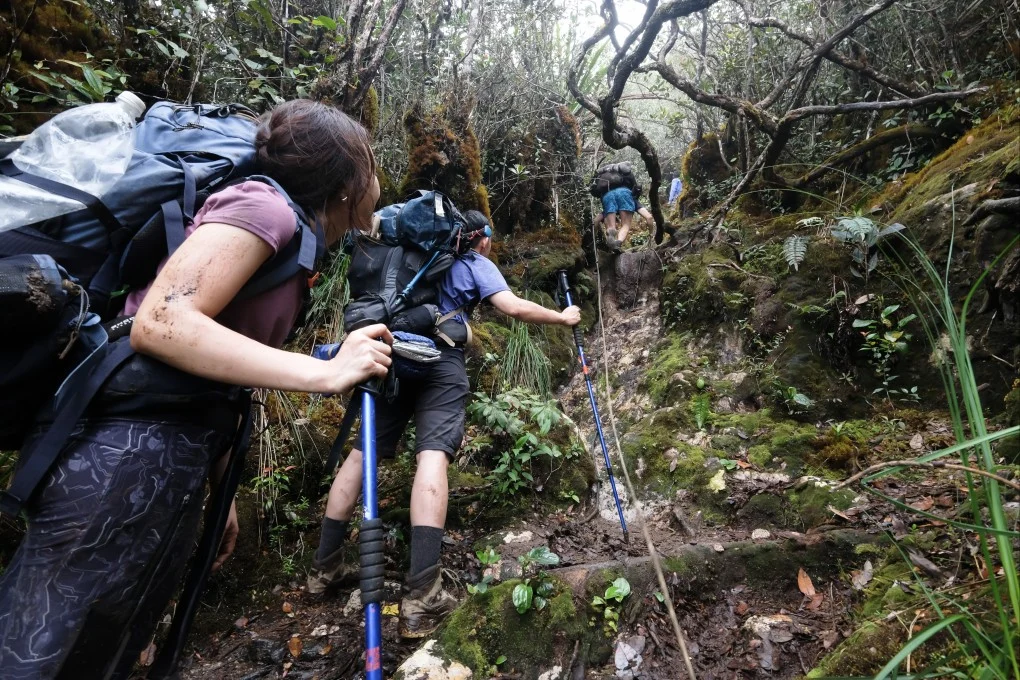
The Trans Spencer Chapman trail is a cross‑ridge route that requires full expedition gear, mountain guiding, and strict group discipline.
The 49‑year‑old woman suffered a leg injury but chose to continue uphill alone. That single decision — leaving her group, pushing through pain, ignoring her body’s warning signs — turned a manageable situation into a life‑threatening one.
The Inconvenient Truth About Malaysia’s Hiking Culture
Here is a reality many hikers ignore: a large number of Malaysia’s popular hiking spots sit on private land or state land without recreational gazettement.
Genting’s road is a famous example, but the same principle applies to dozens of smaller hills across the country. Legally, you are a guest. But practically, you are on your own.
That does not mean you should not go. It means you must prepare as if no one is coming to help you.
We cannot expect the government to fence every hill or babysit every climber. The national budget does not allow for rescue towers on every jungle slope, nor should it.
What we can expect is for hikers to stop treating every slope like a theme park ride. When you step onto an unmarked trail or a G8 mountain with a known injury, you become your own rescue team. Act like it.
What Every Hiker Must Do Before Stepping Onto Any Trail
1. Never split your group.
The moment you feel tired, the safest place is with other people. Every single hiking fatality where a person wanders off starts with “I’ll go ahead alone.” Do not say those words. Not once.
2. Carry a physical map and a fully charged power bank.
Phone batteries die. GPS signals fail in deep valleys. A paper map does not need a signal. A headlamp is not optional — even for a “short afternoon hike.” Darkness falls fast under a jungle canopy.
3. Set a turn‑around time and stick to it.
The most common mistake is pushing for the summit when your body says stop. The mountain will be there next weekend. Your life will not. If your planned turn‑around time is 2pm, you turn back at 2pm — not 2:15, not “just five more minutes.”
The Question We Keep Dodging
After two tragedies in one week, the question is no longer “are Malaysia’s mountains dangerous?” The answer is yes — some of them are very dangerous. The real question is: are hikers willing to change their behaviour?
We have seen the same patterns for years. Underestimating difficulty. Overestimating personal fitness. Splitting up. Continuing with injuries. Leaving no trip plan. Treating jungle trails like a stroll in the park.
The government can improve signage on gazetted trails. It can require permits for high‑difficulty mountains. It can even close certain routes during monsoon seasons. But no law can stop a tired, disoriented hiker from walking 500 metres off‑trail on an unmarked hill.
That responsibility belongs to the person wearing the hiking boots.
Join the conversation
Comments
Login to join the conversation
No comments yet. Be the first to say something!