
30 May 2026
Malaysia
Culture
The Art of the Impossible: Free Speech in a Country That Fears Its Own Shadows
When a movie disappears not because of a ban but because no one dares to defend it, Malaysia's tolerance for debate has never felt thinner
Listen to article
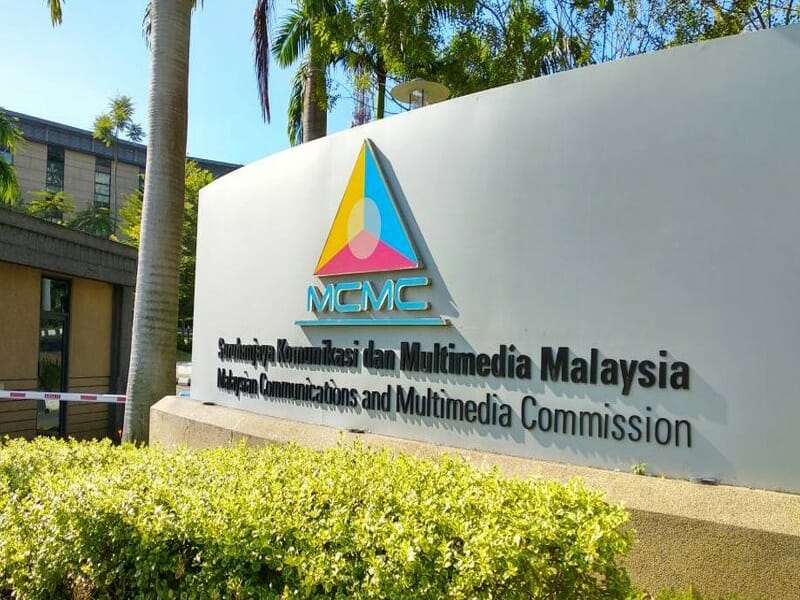
On May 29, 2025, the Malaysian Communications and Multimedia Commission issued a clarification that was less a statement and more a surrender. The controversial film that had been generating online outrage, the one everyone assumed had been formally banned was actually taken down voluntarily by its distributor. No government order. No official prohibition. Just the quiet, preemptive withdrawal of a piece of art because someone, somewhere, decided the temperature was too high.
That clarification was meant to reassure. Look, the regulatory body seemed to say, we didn't ban anything. The market decided.
Right, they removed the movie. Entirely voluntary, of course. No arms were twisted, no official threats were made, and definitely no bureaucratic side-eyes were given.
It was just a sudden, spontaneous outburst of corporate civic-mindedness! Meanwhile, audiences in neighboring countries are streaming the exact same film without their social fabric instantaneously dissolving into chaos. This is not censorship with a capital C. It is something more insidious. It is self-censorship as a survival strategy.
And it raises an uncomfortable question: if you cannot say anything that might possibly upset anyone with political or religious authority, are you living in a country with free speech? Or are you living in a country where freedom exists only until someone decides to take offense?
Where Is the Line?
Let me be clear: no serious advocate of free speech believes in absolute, consequence-free expression. Every society draws lines. Incitement to violence is not protected speech. Defamation is not protected speech. Child pornography is not protected speech. These are genuine harms, and regulating them does not undermine the principle of free expression.
But Malaysia's problem is not that it draws lines. It is that the lines are drawn in invisible ink, moved without notice, and enforced with unpredictable severity. What exactly is too much? The official answer is contained in various laws: the Printing Presses and Publications Act, the Sedition Act, the Communications and Multimedia Act, the Penal Code.
Unofficially, the answer is whatever the authorities—or sufficiently vocal pressure groups—decide on any given Tuesday.
Consider the range of recent cases. A graphic novel about the history of Malaysian comics was seized because it contained a single panel depicting a beer bottle. A book about the May 13 riots—a historical event fifty-six years old—was banned because it "might disrupt public order." A film exploring religious questions from a humanist perspective was pulled before any official ban could be issued.
And without a stable standard, the only rational choice for creators is to avoid anything that might possibly, theoretically, in some strained interpretation, be deemed sensitive.
That is not a society with free speech. That is a society with permission slips.
There is a cruel irony in all of this. The justification for restricting speech is almost always framed in terms of protection: protecting racial harmony, protecting religious sanctity, protecting national stability.
But what kind of harmony is so fragile that it cannot survive a film? What kind of faith is so weak that it cannot withstand a question? What kind of nation is so brittle that a book might shatter it?
A truly robust society does not need to shield itself from ideas it finds uncomfortable. It debates them. It refutes them. It allows them to be aired and then demonstrates, through the quality of its arguments, why they are wrong.
So What Is Too Much?
A society that bans a book because it might offend someone has already conceded that its citizens are incapable of handling disagreement.
A government that permits a film to be taken down without a formal order has already chosen comfort over principle. A nation that cannot tell the difference between blasphemy and inquiry, between sedition and critique, between sensitivity and fragility that nation is not protecting itself. It is shrinking itself.
The MCMC said the studio took down the movie. Maybe that is true. But the studio took it down because the studio knew, from long experience, that leaving it up would invite trouble. And that knowledge, that preemptive fear is the real censorship.
It does not need a letter. It does not need a ban. It lives in the minds of every creator, every publisher, every filmmaker who has learned that in Malaysia, the safest art is the art that says nothing at all.
That is not free speech. That is silence wearing a smile. And it is time to ask whether that is really the Malaysia we want to build.
Join the conversation
Comments
Login to join the conversation
No comments yet. Be the first to say something!