
03 Jun 2026
Malaysia
The Johor Traffic Jam: Why Four-Way Fights Could Save BN and PH
PN needs a wave, but what it's getting is a crowded intersection. And Rafizi's gamble might reveal more about his own brand than about Johor's future.
Listen to article
Newsenz Official
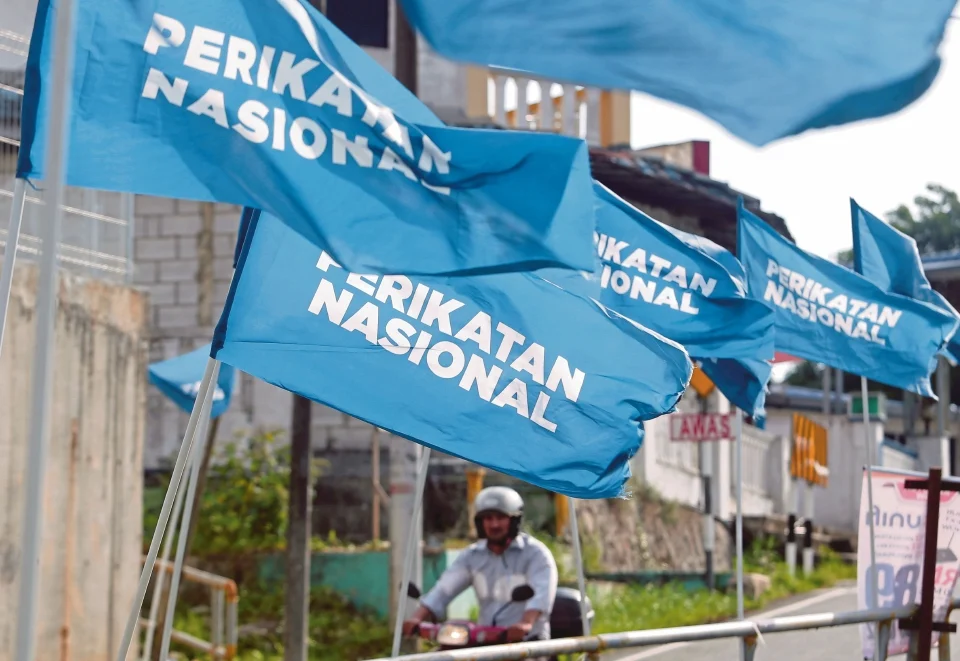
On paper, Johor should be Perikatan Nasional's best chance to prove that its 2022 general election breakthrough was no fluke.
The state is Malay-majority but not insular, development-driven but with a restive rural hinterland, and politically sophisticated enough to punish incumbent governments when they disappoint.
For months, political analysts have whispered that Johor is the next big battleground—the place where the unity government's durability will be tested and where PN could finally translate its national momentum into state power.
But here is the problem: everyone else read the same memo.
PN wants all 56 seats. Barisan Nasional intends to contest all 56 seats. Pakatan Harapan is also preparing for a full statewide contest. And now, Rafizi Ramli's newly rebranded Bersama coalition has announced ambitions to compete across Johor as well.
That is not an election. That is a four-way traffic jam at rush hour, with every driver convinced they have the right of way.
The result will not be a clean referendum on the unity government. It will be a fragmented, unpredictable mess. And the biggest loser may not be BN or PH, but PN itself—precisely when it thought victory was within reach.
The state is Malay-majority but not insular, development-driven but with a restive rural hinterland, and politically sophisticated enough to punish incumbent governments when they disappoint.
For months, political analysts have whispered that Johor is the next big battleground—the place where the unity government's durability will be tested and where PN could finally translate its national momentum into state power.
But here is the problem: everyone else read the same memo.
PN wants all 56 seats. Barisan Nasional intends to contest all 56 seats. Pakatan Harapan is also preparing for a full statewide contest. And now, Rafizi Ramli's newly rebranded Bersama coalition has announced ambitions to compete across Johor as well.
That is not an election. That is a four-way traffic jam at rush hour, with every driver convinced they have the right of way.
The result will not be a clean referendum on the unity government. It will be a fragmented, unpredictable mess. And the biggest loser may not be BN or PH, but PN itself—precisely when it thought victory was within reach.
The Opposition's Consolidation Problem
For any opposition movement to topple an incumbent, it needs a simple, compelling alternative. One clear flag. One unified message. One ballot line that voters who want change can rally behind.
That is how Pakatan Rakyat built its 2008 and 2013 waves. That is how PN surged in the Malay heartland in 2022. Opposition victories are built on consolidation.
Johor is heading in the opposite direction. Instead of one opposition force gathering momentum, multiple parties will end up competing for the same pool of dissatisfied voters. A Malay voter who is tired of BN corruption and frustrated with PH's compromises now has at least three anti-government options: PN, Bersama, and whatever independent or smaller players emerge. That is not a wave. That is a leaky bucket.
The question is no longer whether PN can gain support. The question is whether its gains will be cancelled out by other opposition actors siphoning votes from the same constituencies.
Vote-splitting is a brutal arithmetic. A candidate who wins 40 percent in a three-way fight takes the seat. A candidate who wins 35 percent in a four-way fight goes home. PN may not lose because its support collapses, but because its expansion overlaps with other anti-government blocs that refuse to step aside.
PN's Multi-Ethnic Ceiling
PN's core strength remains in Malay-majority areas, particularly through Bersatu's machinery and PAS's religious network.
But Johor is not Kelantan or Terengganu. It is politically mixed, heavily urbanised along the southern corridor, and highly sensitive to local governance performance and stability narratives.
Chinese and Indian voters in Johor's mixed seats have never shown any appetite for PN's brand of Malay-Muslim nationalism. They remember PAS's record. They distrust Bersatu's chameleon politics.
Even if PN maintains or slightly improves its Malay vote share, it still faces a structural ceiling. Winning in Johor requires crossing multi-ethnic thresholds in competitive seats, not just dominating specific demographic pockets.
A party that wins 80 percent of Malay votes but only 10 percent of non-Malay votes still loses in a seat that is 55 percent Malay. And in a fragmented contest where BN, PH, and Bersama are all in the mix, anti-government votes no longer consolidate into a single bloc.
That limits PN's ability to translate sentiment into seat gains—especially in mixed constituencies where small shifts in turnout or vote distribution decide outcomes.
In other words, PN is preparing for a two-horse race in a state that is about to become a four-horse stampede. And in a stampede, the horse that runs alone often trips.
Rafizi's Lonely Experiment
But here is the angle no one is talking about. This election may be an even bigger test for Rafizi Ramli than for any party leader.
For more than a decade, Rafizi built a reputation as one of Malaysia's most influential opposition strategists. He shaped campaigns, exposed scandals, and mobilised support within PKR and Pakatan Harapan. His data-driven approach, his willingness to take risks, and his ability to speak directly to disillusioned Malay voters made him a force that both BN and PH had to reckon with.
When he stepped back from active politics after the 2022 election, many assumed he would return as a kingmaker within the unity government. Instead, Rafizi has chosen a different path. Bersama is his attempt to build political influence outside the PKR and PH ecosystem. It is a gamble that his personal brand, his analytical reputation, and his network can compete against the machinery of established coalitions.
If Bersama performs strongly in Johor, Rafizi proves that he still has the ability to shape Malaysian politics independently—that he is not merely a product of PKR's structure but a genuine political entrepreneur.
If Bersama struggles, however, it raises uncomfortable questions. How much of Rafizi's political strength came from Rafizi himself, and how much came from the machinery of PKR and PH? Can he mobilise voters without the Anwar endorsement? Can he fund a campaign without the party's institutional backing? Can he persuade fence-sitters without the reassurance of a larger coalition behind him?
In that sense, Johor is not just a state election. It may be the first real referendum on Rafizi's political relevance after leaving the mainstream opposition fold. And the results will be read not just in seat counts, but in the quiet calculation of every PKR and PH insider who has ever wondered whether Rafizi's talent was transferable or tethered.
The Usual Rules No Longer Apply
So where does that leave us? Johor is shaping up to be a fragmented, unpredictable contest.
PN needs a wave but faces a crowded field that will split the anti-government vote. Its Malay strength hits a multi-ethnic ceiling that no amount of PAS religious outreach can easily break. And Rafizi is gambling his personal brand on a new coalition outside his comfort zone, with no guarantee that his old magic will work in a new setting.
Who wins? Too early to tell. But one thing is certain: the usual rules don't apply anymore. In a four-way traffic jam, the fastest car is useless if it cannot move.
The cleverest strategist is irrelevant if no one is listening. And the opposition wave that everyone has been waiting for may never arrive—not because it lacked strength, but because it drowned in a sea of its own allies.
Johor's voters will decide. But for now, the only thing thicker than the political rhetoric is the crowd.
Join the conversation
Comments
Login to join the conversation
No comments yet. Be the first to say something!