
04 Jun 2026
Malaysia
Should Malaysia send back Rohingyas?
An online petition targeting Rohingya refugees in Malaysia has gone viral
Listen to article
Newsenz Official
Right now, an online petition is circulating in Malaysia with over 160,000 signatures. Its central demand is the removal of the Rohingya community from Malaysia.
This is not the first time this debate has surfaced in public discourse.
The reasoning behind the petition is relatively consistent, with supporters arguing that the current situation is no longer sustainable and that Malaysia requires a clearer long-term approach.
In their view, the government should work with international organisations to identify more permanent solutions, including resettlement in third countries or strengthened support mechanisms closer to Myanmar.
These arguments are often grounded in concerns about strained public resources, challenges in enforcement and broader questions of national stability.
However, the reality underlying this issue is significantly more complex than the framing of the petition suggests.
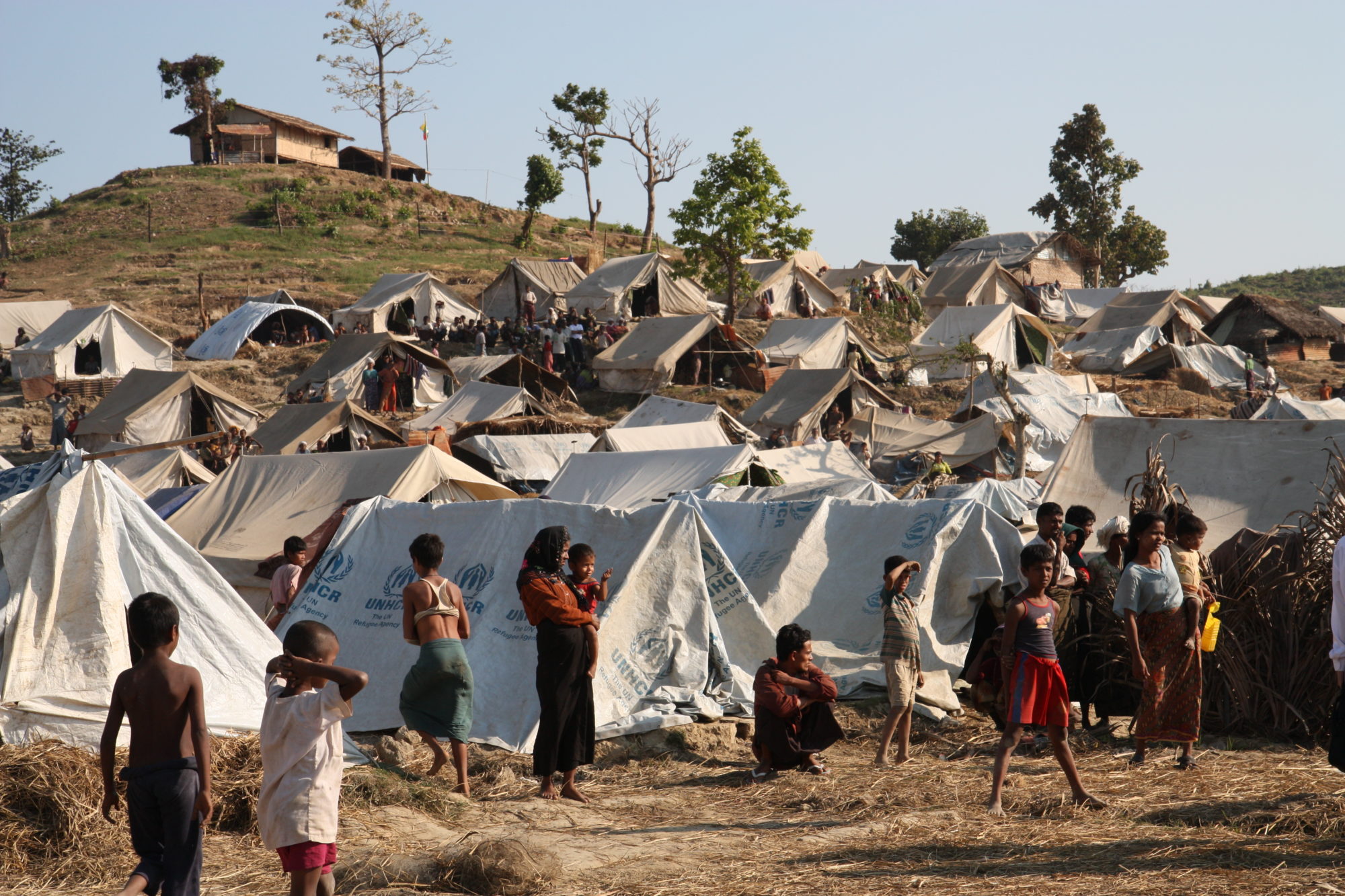
The Rohingya are a stateless minority from Myanmar who have experienced decades of systematic discrimination, violence and a continued denial of citizenship in their country of origin.
The large-scale violence in 2017 forced hundreds of thousands to flee, with many seeking refuge in neighbouring countries, including Malaysia.
Because they are not recognised as citizens by Myanmar, there is no safe or legally recognised pathway for most of them to return.
As a result, this is not best understood as a temporary migration wave, but rather as a prolonged displacement crisis with no clear endpoint.
This is where the Malaysian context becomes particularly important.
Malaysia is not a signatory to the 1951 Refugee Convention, yet in practice it has allowed the United Nations High Commissioner for Refugees (UNHCR) to register refugees and issue identification documents.
In many cases, individuals registered under UNHCR are not detained during immigration enforcement operations, although this arrangement is based on administrative practice rather than a fully codified domestic legal framework.
At the same time, the Malaysian government has introduced various administrative measures over the years to manage refugee-related issues, including biometric registration systems and discussions around integrating working-age refugees into sectors facing labour shortages.
However, these initiatives remain fragmented and do not constitute a comprehensive national refugee policy.
The core issue, therefore, is not simply whether Malaysia accepts or rejects refugees.
Rather, it is the absence of a formal legal framework that defines how refugees are to be governed within the country.
Without clear domestic policies governing work rights, access to education, healthcare provisions and long-term integration or resettlement pathways, refugees exist in a legal grey area.
In practice, this often results in reliance on informal labour arrangements, humanitarian assistance and inconsistent enforcement outcomes that vary by context and circumstance.
This lack of a structured system also contributes directly to public frustration.
When incidents occur or when claims circulate online without full context, public reaction is not shaped by a clearly defined legal or institutional framework.
Instead, it is shaped by uncertainty, fragmented information and accumulated fatigue over time.
In such conditions, misunderstandings and tensions are more likely to escalate, not necessarily because of a single event, but because there is no stable system through which events are consistently interpreted and managed.
Ultimately, it is difficult to sustain a long-term displaced population within a country that does not have a long-term policy framework to define their legal status, rights and limitations.
However, remaining in this policy gap is not a neutral position.
Over time, it contributes to growing public frustration while also increasing the vulnerability of the Rohingya community, who remain caught between legal invisibility and the realities of daily survival.
Without clearer rules and a more structured policy approach, both the host society and the refugee community continue to bear the consequences of an incomplete system.
Until that gap is addressed, the debate is likely to resurface repeatedly, becoming increasingly polarised with each cycle.
Join the conversation
Comments
Login to join the conversation
No comments yet. Be the first to say something!