
04 Jun 2026
Tech
The Data Centre Mirage: Johor’s Green Paradise Is Being Boiled Away, One Query at a Time
You wanted lush rainforests and pristine rivers. The government gave you 500 data centres. Now the water that once fed your waterfalls is cooling someone else’s AI.
Listen to article
Newsenz Official
Imagine this. You wake up in Johor. The morning air is thick with the scent of wet earth and wild ginger. You pack a light bag, drive an hour into the hinterland, and there it is: a jungle-fringed river, clear as glass, tumbling over granite boulders into a pool so inviting you forget your phone exists. You wade in. The water is cool enough to steal your breath.
Now imagine that river, ten years from now. Lower. Warmer. Maybe even seasonal. Not because the monsoon failed, but because somewhere upstream, a row of windowless concrete buildings is drawing millions of litres a day just to stop its servers from melting.
That is not a dystopian novel. That is Johor in 2026.
The Thirst Behind Your Typing
Let’s be honest with ourselves. Most of us love using AI. We generate caricatures of our friends. We ask ChatGPT to rewrite emails. We prompt Midjourney to turn “a cat in a spacesuit eating durian” into something strangely beautiful. Every query feels weightless, magical, free.
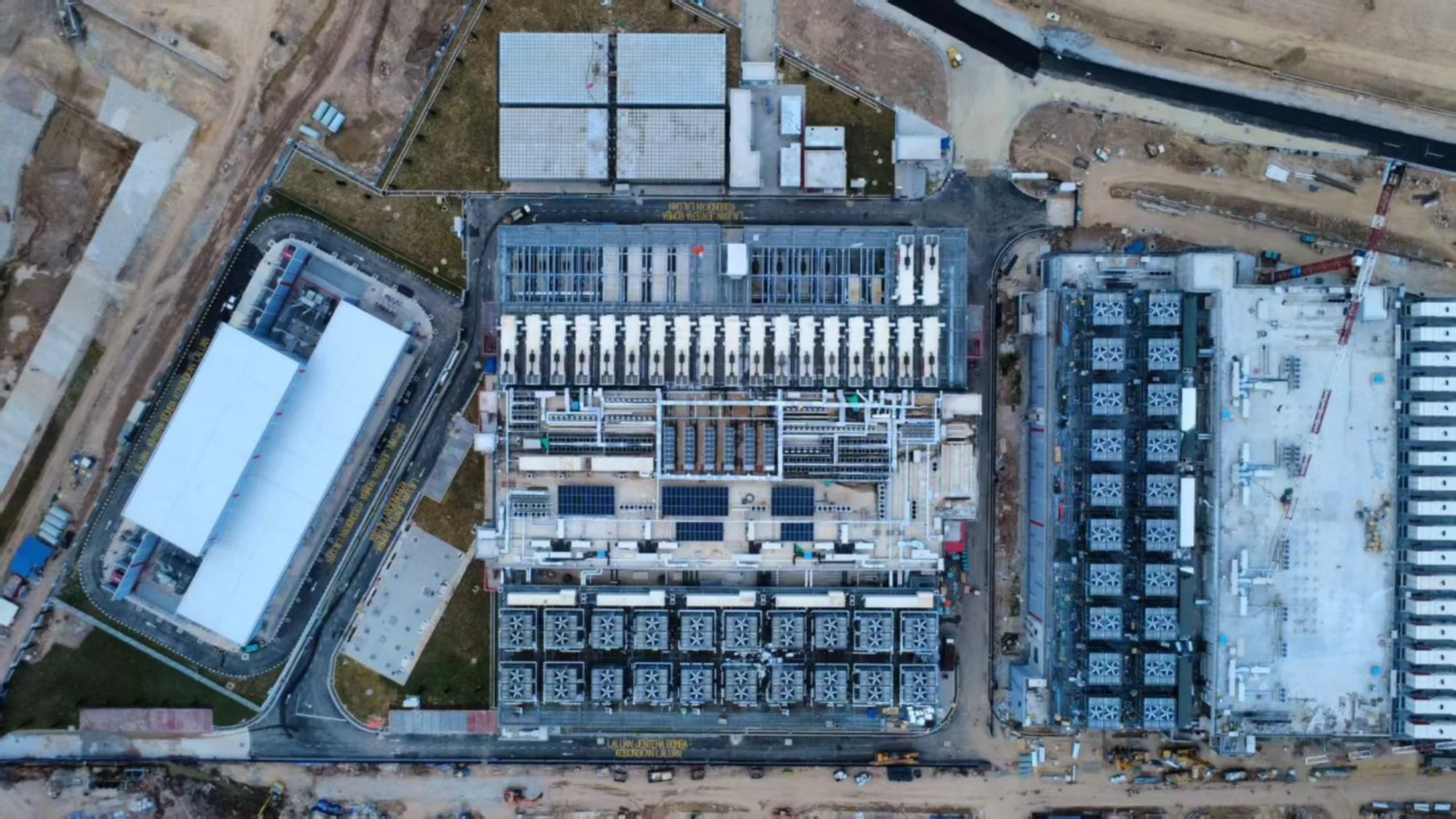
But every time you press enter, somewhere in Johor, water is being boiled to cool down servers. Not metaphorically. Actually boiled. Data centres generate immense heat. The cheapest way to remove that heat is evaporative cooling — water turned to steam, carrying thermal energy away. A single 100‑megawatt data centre drinks about 4.2 million litres of water per day. That is enough for 10,000 people. Their drinking, washing, cooking, farming — all of it.
Now multiply that by dozens of centres. Now add more under construction. Now realise that Johor has approved over RM160 billion in data centre investments. The water doesn’t just disappear. It rises into the sky as vapour, leaving nothing behind for the rivers you love.
The Singapore Spillover
The question is not whether Malaysia should welcome data centres. Of course it should. A factory exports goods. A university creates talent. A data centre, in theory, plugs the nation into the digital economy. But a poorly governed boom becomes something awkward: selling cheap electricity, water, and land to foreign tech giants while telling ourselves we’ve joined the AI revolution.
So who prompted this? Global hyperscalers priced out of Singapore. The Lion City, ever pragmatic, paused new data centre construction over exactly the same concerns — power grid strain and water scarcity. So the tech giants looked across the Causeway. Microsoft, Google, AWS, ByteDance — all have planted flags in Johor. On paper, that is a win. RM160 billion of approved investment. Thousands of construction jobs. A seat at the global AI table.
But the problems are piling up faster than the servers.
Running on Empty
Let’s start with water, because water is the most visceral. Johor has already classified large data centres as “high water users” — facilities that draw nearly 200 times more water than smaller industrial units. The state government stopped approving new centres in that category. Good. But existing projects were approved before the ban. And once a centre is built, it will keep drinking for decades.
Residents near one facility in Gelang Patah staged Malaysia’s first data centre protest this year. They are not just worried about future shortages. They are already living with the consequences — lower water pressure, higher bills, and a creeping fear that their taps might one day run dry while servers on the other side of the fence stay cool.
Then there is power. Applications for data centre electricity supply have exceeded 11,000 megawatts. That is about 40 percent of Peninsular Malaysia’s entire generation capacity. The government has halted approvals for non‑AI centres, but AI facilities need even more electricity — sometimes twice as much per rack. That means less power for homes, for small factories, for the very people who are supposed to benefit from all this “investment”. And in a country where electricity tariffs are still subsidised for most users, every megawatt going to a data centre is effectively a transfer of public subsidy to private profit.
The Money That Flows Right Back Out
Here is the part that stings. Economic leakage.
Only about 30 percent of the data centre investment value stays in Malaysia — mostly from construction work: cement, steel, glass, labour. The expensive servers? Imported. The networking gear? Imported. The proprietary cooling systems? Imported. So billions of ringgit are announced as “investment”, but a huge chunk flows straight back to foreign manufacturers in the United States, China, and Europe.
What remains for Johor? A few hundred permanent technical staff. A fat electricity bill. A depleted water table. And a landscape dotted with humming concrete fortresses where rainforest once stood.
The Long Hangover
Then there is the long‑term question that no one wants to answer. These facilities are designed to run for twenty, thirty, even forty years. They will keep consuming water, power, and land long after the construction dust settles. The technology inside them will become obsolete in a decade. But the building — the concrete shell, the cooling towers, the massive electrical substation — will stay.
And when the tech giants move on to cheaper locations or newer generations of hardware? Who pays to decommission a data centre? Who cleans up the environmental mess? Who remediates the land? In most current agreements, the answer is: no one. The facility gets sold to a lower‑tier operator. Or it sits empty, still drawing standby power, still leaking the ghosts of its former thirst.
Johor won the data centre race. But winning a race doesn’t matter if you collapse at the finish line.
The Question We Should Be Asking
Here is the hope. The problems are known. The protests are happening. The numbers are public. The Gelang Patah demonstration was small, but it was a first — a community saying, “We see what’s happening, and we don’t accept it.” That means the conversation has started.
And for the first time, people are asking the right question. Not “how many data centres can we attract?” That is the old development mantra — more is better, bigger is better, any investment is good investment. The new question, the grown‑up question, is: “How many can we actually sustain?”
Sustainably, not just electrically. Sustainably, not just until the next drought. Sustainably, in a way that leaves clean water for the grandchildren who will never know the joy of diving into a jungle river if we boil it all away for server racks.
This is not an anti‑technology argument. AI is extraordinary. Data centres are necessary. But necessity is not a blank cheque. Singapore understood that when it hit pause. Ireland, now struggling with its own data centre boom, is imposing strict energy and water efficiency rules. The Netherlands imposed a temporary moratorium. Even drought‑stricken Chile is rethinking its role as South America’s server farm.
Malaysia — specifically Johor — has a choice. It can continue the free‑for‑all, celebrating every announcement while ignoring the accumulating costs. Or it can step back, impose real efficiency standards, require water recycling, mandate renewable energy offsets, and insist on meaningful local economic retention.
The river you love does not have a lobbyist. The aquifer beneath your feet does not issue press releases. But they will remember every litre we gave away.
So the next time you type a prompt into an AI, pause for a second. Your query travelled through fibre optic cables. It reached a server in Johor. And somewhere, a valve opened, releasing steam into the tropical air — steam that could have been a river, a rice paddy, a glass of water on a hot day.
Technology is not free. The bill always comes. The only question is who pays it.
Join the conversation
Comments
Login to join the conversation
No comments yet. Be the first to say something!