
05 Jun 2026
Malaysia
Rethinking Stray Dog Management: What Penang’s Approach Gets Right
In Penang, stray dogs are managed through a Trap-Neuter-Release programme
Listen to article
Newsenz Official
What if a stray dog didn’t have to be treated as a problem in the first place?
That question sits at the centre of Penang’s approach to stray dog management, where the Trap-Neuter-Release (TNR) programme has become the main strategy for controlling the stray population.
Instead of removing or culling stray dogs, the system focuses on intervention at the source of population growth.
Stray dogs are humanely trapped by trained teams working alongside animal welfare groups.
They are then taken to veterinary partners where they are sterilised, vaccinated and marked for identification before being released back into managed environments.
On paper, it is a simple process. In practice, it is a coordinated system involving logistics, funding and long-term planning.
Since 2018, more than 8,000 dogs have been neutered under this programme in Penang Island alone.
One of the defining features of Penang’s model is that it is not run by a single institution acting alone.
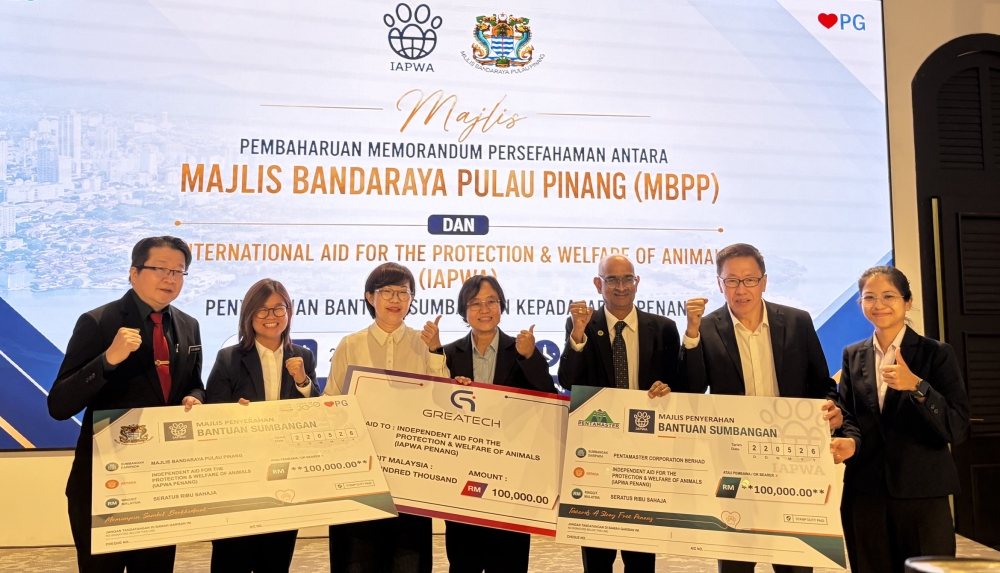
The Penang Island City Council works in partnership with animal welfare organisations such as IAPWA Penang, which handles much of the fieldwork including rescue, transport and animal care.
This division of responsibility allows the programme to function at scale.
Funding is similarly distributed.
The city council contributes facilities, operational support and annual allocations.
At the same time, NGOs raise significant funds through public donations, while private companies have also stepped in with direct financial support.
This creates a hybrid model. Part public policy, part civil society initiative and part private sector contribution.
In effect, stray management becomes a shared civic responsibility rather than a purely governmental task.
The programme has already produced measurable outcomes.
Since its introduction, no stray dogs have been culled on Penang Island under this framework.
Thousands of animals have been sterilised and over a thousand have been rehomed into families instead of remaining on the streets.
Beyond the numbers, the more significant shift is structural.
The system moves away from reactive responses to stray population spikes and instead focuses on long-term population control through prevention.
This creates a more stable framework for managing strays, rather than repeated cycles of escalation and intervention.
Penang is now extending the approach further.
New sanctuaries are being developed for dogs that are too aggressive or unsafe to be released.
This adds another layer to the system, ensuring that animal welfare and public safety are both accounted for.
At the same time, there are ongoing discussions around preventive measures such as mandatory pet registration and microchipping.
These policies aim to reduce abandonment at the source by improving accountability in pet ownership.
Taken together, these developments show a system that is still evolving rather than one that has reached its final form.
The key difference in Penang’s approach is not simply operational. It is conceptual.
Traditional stray control often focuses on removal. Reduce numbers quickly, respond to immediate risks and manage visible problems.
TNR-based systems shift that logic. They focus instead on interrupting reproduction cycles and stabilising populations over time.
That makes it slower, more resource-intensive and dependent on sustained cooperation between multiple stakeholders. But it also reduces the conditions that continuously regenerate the problem.
It is, in effect, a transition from control through elimination to control through prevention.
Penang’s experience suggests that stray management does not have to rely on short-term or high-impact interventions alone.
Instead, it can be built around sustained cooperation, structured care and long-term population control.
It does not remove animals from the equation. It changes the conditions that produce the issue in the first place.
And that raises a broader question.
If a structured, cooperative and humane system can reduce stray populations without culling, what would it take for more states to consider a similar approach?
That question sits at the centre of Penang’s approach to stray dog management, where the Trap-Neuter-Release (TNR) programme has become the main strategy for controlling the stray population.
Instead of removing or culling stray dogs, the system focuses on intervention at the source of population growth.
Stray dogs are humanely trapped by trained teams working alongside animal welfare groups.
They are then taken to veterinary partners where they are sterilised, vaccinated and marked for identification before being released back into managed environments.
On paper, it is a simple process. In practice, it is a coordinated system involving logistics, funding and long-term planning.
Since 2018, more than 8,000 dogs have been neutered under this programme in Penang Island alone.
One of the defining features of Penang’s model is that it is not run by a single institution acting alone.
The Penang Island City Council works in partnership with animal welfare organisations such as IAPWA Penang, which handles much of the fieldwork including rescue, transport and animal care.
This division of responsibility allows the programme to function at scale.
Funding is similarly distributed.
The city council contributes facilities, operational support and annual allocations.
At the same time, NGOs raise significant funds through public donations, while private companies have also stepped in with direct financial support.
This creates a hybrid model. Part public policy, part civil society initiative and part private sector contribution.
In effect, stray management becomes a shared civic responsibility rather than a purely governmental task.
The programme has already produced measurable outcomes.
Since its introduction, no stray dogs have been culled on Penang Island under this framework.
Thousands of animals have been sterilised and over a thousand have been rehomed into families instead of remaining on the streets.
Beyond the numbers, the more significant shift is structural.
The system moves away from reactive responses to stray population spikes and instead focuses on long-term population control through prevention.
This creates a more stable framework for managing strays, rather than repeated cycles of escalation and intervention.
Penang is now extending the approach further.
New sanctuaries are being developed for dogs that are too aggressive or unsafe to be released.
This adds another layer to the system, ensuring that animal welfare and public safety are both accounted for.
At the same time, there are ongoing discussions around preventive measures such as mandatory pet registration and microchipping.
These policies aim to reduce abandonment at the source by improving accountability in pet ownership.
Taken together, these developments show a system that is still evolving rather than one that has reached its final form.
The key difference in Penang’s approach is not simply operational. It is conceptual.
Traditional stray control often focuses on removal. Reduce numbers quickly, respond to immediate risks and manage visible problems.
TNR-based systems shift that logic. They focus instead on interrupting reproduction cycles and stabilising populations over time.
That makes it slower, more resource-intensive and dependent on sustained cooperation between multiple stakeholders. But it also reduces the conditions that continuously regenerate the problem.
It is, in effect, a transition from control through elimination to control through prevention.
Penang’s experience suggests that stray management does not have to rely on short-term or high-impact interventions alone.
Instead, it can be built around sustained cooperation, structured care and long-term population control.
It does not remove animals from the equation. It changes the conditions that produce the issue in the first place.
And that raises a broader question.
If a structured, cooperative and humane system can reduce stray populations without culling, what would it take for more states to consider a similar approach?
Join the conversation
Comments
Login to join the conversation
No comments yet. Be the first to say something!