
08 Jun 2026
Malaysia
The BUDI 95 Trap: Why Abolishing Fuel Subsidies Sounds Smart but Would Break the Country
Anwar says no to higher fuel prices. The critics say abolish subsidies entirely. Both are wrong. But only one side is being honest about the pain.
Listen to article
Newsenz Official
At the Madani Rakan Muda Programme this week, Prime Minister Anwar Ibrahim did something that won't make headlines but matters enormously. He rejected calls to raise fuel prices. His reasoning was simple: the government can cover the subsidy bill through austerity and stopping leakages. He also refused suggestions to take out loans, saying: "If they ask for debt, I can go into debt now, but after I leave, the children will have to bear it."
So the subsidies stay. For now.
But a quieter, more uncomfortable question is floating around policy circles and social media threads: what if we just removed the fuel subsidies entirely? What if we abolished BUDI 95 – the targeted subsidy scheme for RON95 petrol – and let prices float to market levels?
On paper, it makes sense. Subsidies cost the government billions. They distort consumption. They benefit the rich as much as the poor. They are, in the cold language of economists, "inefficient." So why not just rip off the Band-Aid?
Because the Band-Aid is holding together a wound that hasn't healed. And removing it overnight would cause a hemorrhage.
What Happens the Morning After Abolition
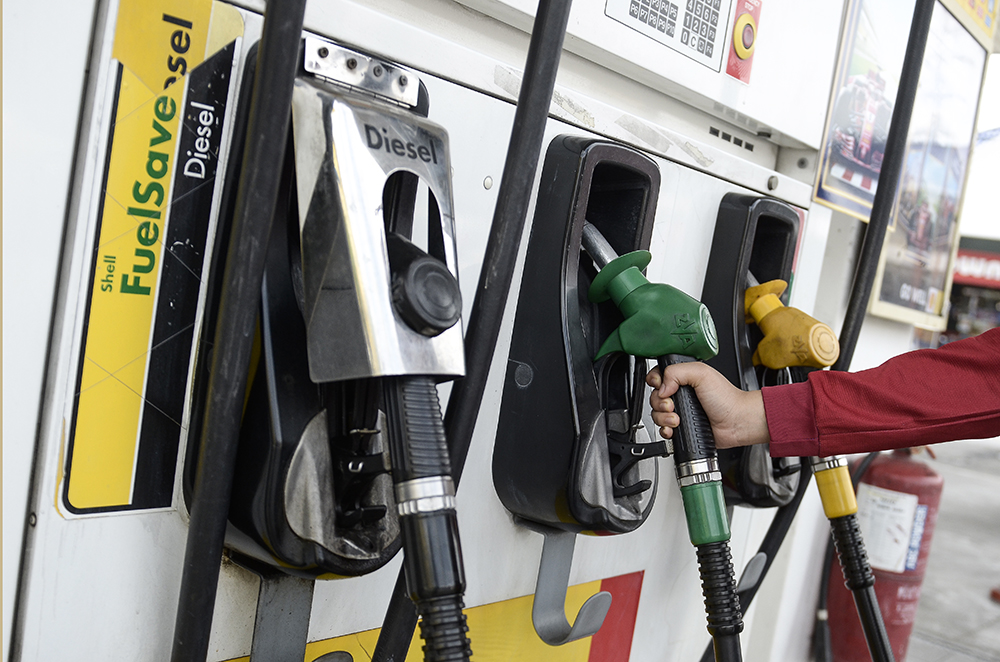
Let's be concrete. Right now, RON95 petrol is priced at RM1.99 per litre in Peninsular Malaysia under the BUDI 95 scheme for eligible recipients. Non-eligible users pay slightly more, but the subsidy still keeps prices far below market rates.
If we abolished the subsidy entirely, petrol prices would likely double overnight. A conservative estimate puts the market price somewhere between RM3.50 and RM4.00 per litre.
Now trace the ripple effects. Every single good in Malaysia moves by truck. Food, furniture, construction materials, school supplies – all of it runs on diesel and petrol.
Transport companies would raise their fees immediately. Supermarkets would repric e shelves within days. The inflation we complained about last year – the 3 percent, the 4 percent – would look like a warm-up.
Bus and taxi fares would rise. Commuters already squeezed by living costs would pay more just to get to work. Small business owners running delivery vans would see their margins evaporate. A nasi lemak seller who drives to the wet market every morning would have to either eat the cost or pass it to customers.
The wealthy can absorb a RM4 litre. They drive nicer cars, but they also have savings, buffers, alternatives. A minimum wage earner cannot. For a family earning RM1,500 a month, fuel is not a luxury. It is the thread that connects them to jobs, schools, clinics, and markets. Without subsidies, their monthly fuel bill could eat up half their disposable income. That is not a policy adjustment. That is a humanitarian crisis in the making.
The Opposition's Dream Scenario
Here is the political reality that subsidy abolitionists ignore. The opposition would have a field day.
Abolishing subsidies without a perfect safety net – and no such net exists – would be painted as a war on the poor. PAS would flood TikTok with videos of grieving mothers at petrol stations. Bersatu would call it Mahathir-era cruelty rebranded. Even within the Unity Government, partners like BN and GPS would distance themselves faster than you can say "by-election."
And here is the uncomfortable part: they would have a point. A sudden, untargeted removal of fuel subsidies *is* regressive. It *does* hurt the poor more than the rich. It *would* cause genuine suffering. The fact that it makes economic sense on a spreadsheet does not make it politically or morally acceptable in real life.
The BUDI 95 Precedent: Even Small Steps Trigger Outrage
The government already tried a smaller step. In recent months, it reduced the gas quota for BUDI 95 recipients. That was not an abolition. That was a trim around the edges. And what happened?
Intense public scrutiny. Complaints flooded social media. Critics called it a betrayal of election promises. Even a minor adjustment sparked outrage from both the opposition and segments of the public who felt the government was quietly squeezing them.
If a quota reduction caused that much noise, imagine a full abolition. The outcry would not be a news cycle. It would be a political earthquake.
The Contradiction No One Wants to Admit
So let me ask the question that no one in the comment sections wants to face: what do people actually want?
They want subsidies to stay. Every time fuel prices are mentioned, the public demands protection.
But they also want the government to reduce debt. Every budget is met with cries of "waste" and "leakage."
They want cheap fuel. But they also want better hospitals, schools, and infrastructure – all of which require revenue.
You cannot have all of it at once. Something has to give.
That is the trap. The government bears a massive cost to keep subsidies alive. Not just fuel – medical, food, electricity. The bill runs into tens of billions annually. And in uncertain global times – oil prices volatile, the ringgit under pressure, supply chains still recovering – how long can the government hold?
Anwar's answer is to stop leakages, cut waste, and run a tighter ship. That is the austerity he mentioned. It is a defensible strategy, but it is slow, invisible, and politically unrewarding. No one holds rallies for "better procurement processes."
The Hard Truth About Anwar
Social media is full of people scolding Anwar. Complaints about everything from the economy to the civil service flood every announcement. The man cannot mention subsidies without being called either a sellout or a socialist, depending on the commenter's mood.
But here is a hard truth that few are willing to type: without him, we would likely be in much bigger trouble.
Let us play that game. Suppose we switch governments tomorrow. Suppose PN takes over. Then what?
The new government would face the exact same problem. Subsidies have created deep reliance among Malaysians. You cannot rip the Band-Aid off overnight. And any step-by-step removal will still face furious scrutiny from both politicians and the public. The only difference is that a PN government would have even less credibility to manage the transition, and its base would demand even steeper cuts to "corruption" without understanding the arithmetic.
Anwar is not perfect. His coalition is fractured. His reforms move at a glacial pace. His messaging is often defensive. But he has been steering the country away from an economic collapse that many did not even see coming. When he took over, the ringgit was sliding, investor confidence was in the toilet, and the previous government had left the books in a state that polite people call "creative."
The Real Question Is Not "Abolish or Keep?"
The real question is: how do we transition without breaking the country?
That answer does not exist yet. It requires a social safety net that Malaysia does not currently have. It requires a public that understands that cheap fuel is not a birthright but a policy choice with trade-offs. It requires political leaders willing to tell the truth and risk their careers.
Pretending there is an easy answer – "just abolish it" or "just keep it forever" – helps no one. The first option would cause a humanitarian and political crisis. The second option would slowly bleed the national budget until something else breaks.
Anwar has chosen the middle path: gradual adjustment, targeted subsidies, and plugging leakages. It is not exciting. It is not heroic. It is the slow, frustrating work of governance in a country that has spent decades addicted to cheap everything.
We are living in confusing times. Hate him all you want, but the man is doing his best in trying times. Expecting excellence within a single term – with a fractured coalition, a global slowdown, and a public addicted to cheap petrol – is not realistic. It is a fantasy.
So should we abolish BUDI 95 altogether?
No. Not yet. Not without a better answer to the question that follows. And anyone who says otherwise is either selling something or has never had to choose between petrol and dinner.
Join the conversation
Comments
Login to join the conversation
No comments yet. Be the first to say something!