
09 Jun 2026
Malaysia
The Penang Prescription: Healing the Poor While the Rich "Pay" the Bill
How a small Malaysian state turned healthcare into an economic engine—and why the rest of the country should be taking notes.
Listen to article
Newsenz Official
What if your state could heal its people and fill its coffers at the same time?
Penang figured it out years ago. And now, it is doubling down.
Just last week, the Penang government submitted a formal proposal to the Health Ministry to expand the PeKa B40 scheme to include rehabilitation services. That means more low-income families can access physiotherapy and recovery treatments at both government and private facilities. It sounds like a small policy tweak. It is not. It is the latest chapter in a quiet revolution that has been unfolding in the northern state for more than a decade.
Penang has done something that most Malaysian states only dream of. It has built a healthcare system that serves two masters at once: the poor citizen who cannot afford private care, and the state budget that cannot afford to keep subsidising everything.
And the secret is almost embarrassingly simple. Penang invited the world to pay for its poor people's hospitals.
The Invisible Upgrade
While most of us were arguing about fuel subsidies and data centres, Penang has been quietly upgrading its public healthcare infrastructure.
The new Seberang Jaya Hospital block, completed at a cost of RM371 million, added more than 300 beds and six operating theatres, bringing the hospital's total capacity to 700 beds. No more crossing the bridge to Penang Island for specialist treatment. That block now serves as the main referral hub for Seberang Perai—a lifeline for hundreds of thousands of mainland residents who used to waste hours in traffic just to see a doctor.
That is not a headline-grabber. It is not a mega-project with a ground-breaking ceremony every six months. It is just a hospital block. But for the family who no longer has to choose between a day's wage and a specialist appointment, it is everything.
Then there is the state-run initiative that recruits private GPs to provide free consultations for B40 patients in their own clinics. The government reimburses the doctors. The patients pay nothing.
It is a simple arbitrage: the state uses its purchasing power to buy bulk healthcare from private providers who already have the infrastructure, then distributes it to those who cannot afford market rates. No new clinics to build. No new doctors to hire. Just smart procurement.
The Medical Tourist Magnet
Here is where the story gets bigger. Penang is not just taking care of its own people. It has become a magnet for medical tourists from across the region. And those tourists are not coming for the beaches.
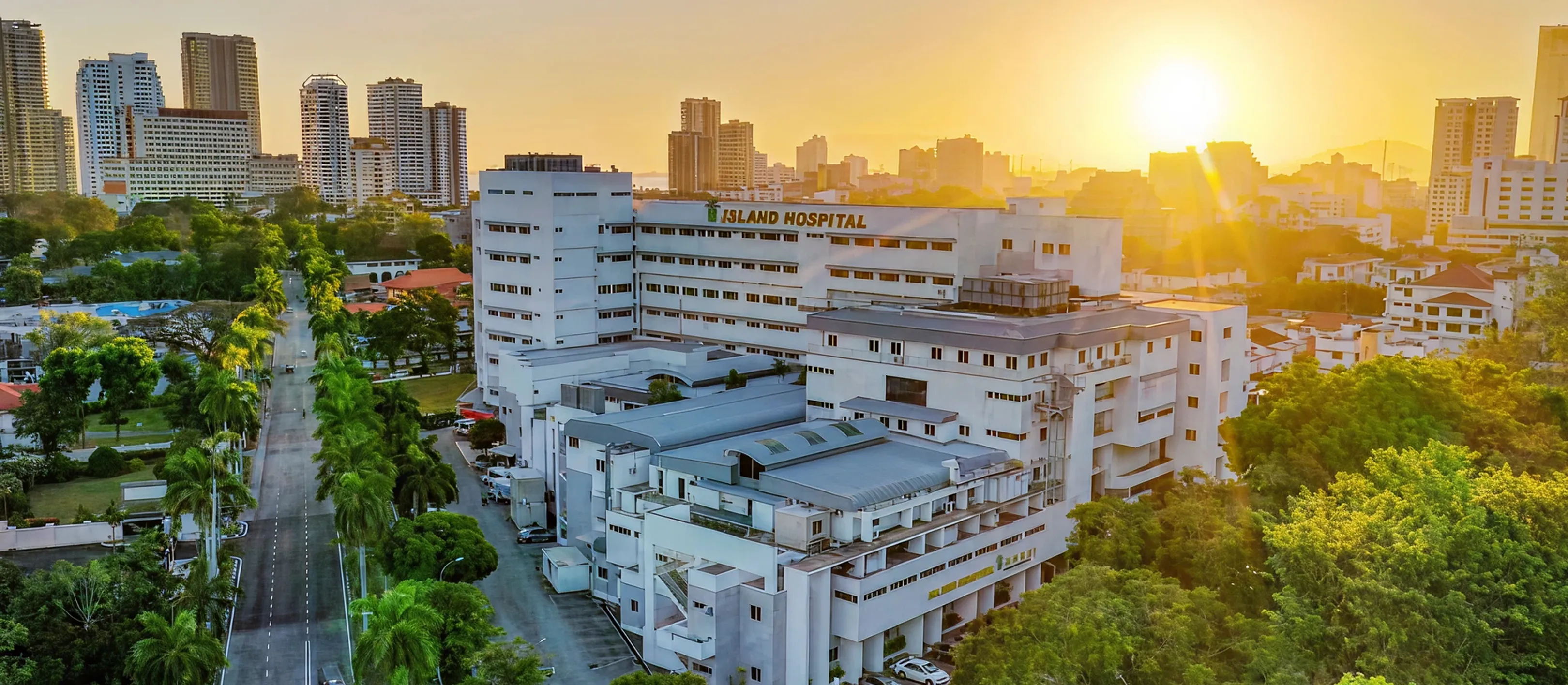
Let us go beyond the obvious. Over 88 percent of doctors at one major private hospital are internationally trained. Some have an average of 24 years of experience. Advanced treatments like AI‑assisted radiation therapy, robotic surgery, and specialised cancer care are all now available on the island—and still cost a fraction of what they would in Singapore or Australia.
The numbers tell the real story. In 2023, Penang hosted around 454,000 medical tourists, generating RM866 million. In 2024, that climbed to RM888 million. Then came 2025: foreign patient arrivals rose by nearly 26 percent to over 527,000 people, pushing revenue past the RM1.13 billion mark.
That is more than a quarter of a billion ringgit in extra income pouring into the state in just one year. Penang now captures roughly half of Malaysia's entire medical tourism market.
The Trickle-Down That Actually Works
Here is the kicker that economists love and politicians rarely mention. Medical tourists do not just pay hospital bills. They book hotels. They eat at restaurants. They take Grab rides. They shop at malls. Every medical tourist supports nearly two local jobs indirectly—not in hospitals, but in hospitality, transport, retail, and food.
This is not charity. This is arithmetic. A wealthy Indonesian cancer patient paying RM100,000 for robotic surgery in Penang is not just saving her own life. She is subsidising the salary of the nurse who treats a B40 grandmother at Seberang Jaya Hospital the next day. She is paying for the electricity that keeps the MRI machine running. She is, without knowing it, part of a cross-subsidy system that most countries would kill to have.
Penang has built a sustainable healthcare economy where high‑quality private services attract global spending—and that spending helps subsidise better public facilities for the people who need them most.
What the Rest of Malaysia Can Learn
Not every state can be Penang. The island has unique advantages: a dense private hospital ecosystem, a large English‑speaking and internationally trained medical workforce, and decades of tourism infrastructure that make it easy for foreigners to arrive, stay, and recover.
But the principle is transferable. The lesson is not "build more private hospitals." The lesson is "build public infrastructure that serves the poor, then let the private sector compete for international patients who will pay full price." The two do not have to be enemies. In Penang, they are partners.
The Bottom Line
The medical tourists are coming. The infrastructure is expanding. The money is flowing. And for once, the people at the bottom of the income ladder might just ride the same wave to better care.
That is the quiet miracle of Penang's healthcare model. It is not a revolution. It is not a protest. It is a well‑run system that figured out that you can heal the poor and fill the coffers at the same time—if you are smart about who pays the bill.
The rest of Malaysia should be taking notes. Because while the rest of the country is still arguing about who deserves what, Penang has already built a machine that delivers both.
And it is only getting bigger.
Join the conversation
Comments
Login to join the conversation
No comments yet. Be the first to say something!