
12 Jun 2026
Malaysia
Cermat Madani Gives Safe Drivers An Extra Reward. Now Malaysians Need More Answers
Safe drivers can now enjoy additional insurance savings, marking a shift from punishment to rewards
Newsenz Official
For years, road safety policies in Malaysia have largely focused on punishment.
Speeding? Get fined. Run a red light? Receive a summons. Cause an accident? Watch your insurance premiums climb.
While enforcement remains important, motorists have traditionally only been rewarded through the No-Claim Discount (NCD) system, which is based on claims history rather than overall driving compliance.
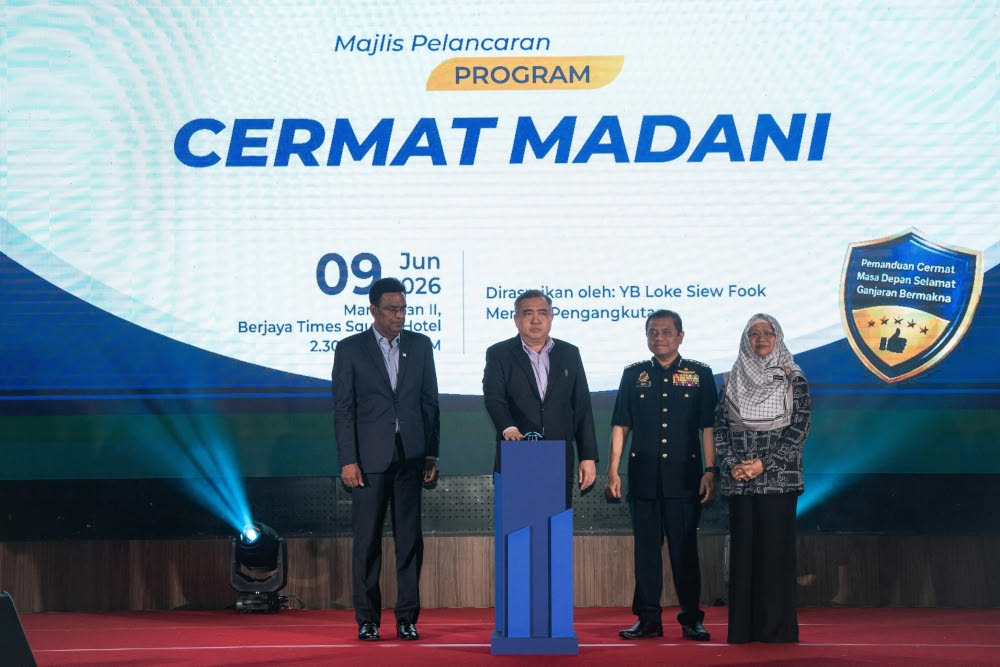
That's what makes the newly launched Cermat Madani programme stand out.
Announced by Transport Minister Anthony Loke, the initiative allows eligible private vehicle owners to receive additional insurance discounts of up to 10 percentage points on top of their existing No-Claim Discount (NCD), potentially bringing total savings to as much as 65%.
In other words, safe drivers are no longer just avoiding penalties. They could soon be rewarded for their good behaviour.
Under Malaysia's current insurance framework, drivers who maintain a claim-free record for five consecutive years can receive a maximum NCD of 55%.
Cermat Madani adds another layer of savings.
For drivers who already enjoy the maximum 55% NCD, Cermat Madani could increase their total discount to 65%. That means someone with a RM1,500 annual premium could save an extra RM150, while those paying RM2,000 or RM3,000 could save an additional RM200 to RM300 a year.
While the exact amount varies depending on vehicle type and insurance premiums, the scheme offers something many motorists can appreciate: lower ownership costs.
More importantly, it introduces a simple message. Safe driving could now come with additional financial rewards beyond the existing NCD system.
One of the programme's most notable features is the technology behind it.
Drivers must renew their road tax through the MyJPJ application, where participating insurance and takaful providers will conduct a risk assessment using an AI-powered system.
The platform will draw data from the Road Transport Department (JPJ) and police traffic summons records to generate a compliance score for individual motorists.
While motorists can begin applying for the programme through MyJPJ earlier, the AI-powered compliance scoring system is expected to enter its full implementation phase on 10 September.
The idea is straightforward. Drivers with better records should theoretically receive better discounts.
From an insurance perspective, the approach makes sense. Safer drivers generally present lower risks, and lower-risk customers often qualify for lower premiums.
However, this is also where the questions begin.
While the government has revealed the existence of the scoring system, many of the details remain unknown.
The biggest concern surrounding Cermat Madani is that many details of the scoring system remain unclear.
While the government has confirmed that drivers will be assessed using data from JPJ and police traffic summons records, it has not revealed exactly how the scoring process works.
For example, it is still unknown how many summonses would be enough to negatively affect a driver's score. A motorist with a single speeding ticket from several years ago may be wondering whether that offence carries the same weight as someone with multiple recent violations.
There are also questions about how far back the system will look into a driver's history. Will it only consider recent traffic records or will summonses issued many years ago still be taken into account when calculating eligibility for discounts?
Another area that remains unclear is whether all offences will be treated equally. Many motorists would expect serious violations, such as reckless driving or running a red light, to carry heavier penalties than minor offences.
However, the government has yet to explain whether different types of summonses will be weighted differently within the scoring system.
Transparency may also become an issue if drivers are unable to see how they were assessed.
At the moment, it is not clear whether motorists will be able to review their compliance scores, understand what factors affected them or challenge the results if they believe there has been a mistake.
This leads to another important question: what happens if the records used to generate a score are inaccurate? Data errors, unresolved summonses or administrative mistakes could potentially affect a driver's eligibility for discounts.
Without a clear appeals or dispute process, affected motorists may have little recourse if they believe their score does not accurately reflect their driving history.
These details matter because they directly affect how much money motorists can save.
Without greater transparency, some drivers may find themselves unsure why they received a smaller discount than expected or why they did not qualify at all.
Another notable aspect of the programme is that the government is not setting the final rules for discounts.
Instead, participating insurance and takaful providers will determine how they interpret compliance scores and how much of a rebate to offer.
One insurer may decide a particular driving profile deserves the full 10% discount. Another may offer less.
This flexibility aligns with Bank Negara Malaysia's ongoing liberalisation of motor insurance pricing, allowing insurers to adopt more risk-based approaches instead of relying on standardised tariffs.
While this could encourage competition and innovation, it may also lead to inconsistencies that confuse consumers.
Two drivers with similar records could potentially receive different outcomes depending on which insurer they choose.
Cermat Madani is not simply a discount programme.
The initiative also encourages motorists to use the MyJPJ application, supporting the government's broader digitalisation efforts.
At the same time, it signals a shift toward more personalised insurance pricing.
Today, the system relies on claim histories, summons records and compliance scores. In the future, insurers may increasingly explore other forms of risk assessment as technology evolves.
That makes Cermat Madani more than a cost-saving measure. It could be an early glimpse into how insurance is priced in the years ahead.
At its core, Cermat Madani addresses a long-standing gap in Malaysia's road safety ecosystem.
Responsible drivers have long benefited from maintaining a claim-free record through the NCD system.
Cermat Madani builds on that by introducing an additional reward tied to driving compliance and traffic records.
That's a positive step.
But for the programme to earn public trust, motorists need a clearer understanding of how they are being assessed, what affects their scores and how discount decisions are made.
Rewarding safe drivers is a welcome idea. Making the system transparent will determine whether the initiative achieves its full potential.
Speeding? Get fined. Run a red light? Receive a summons. Cause an accident? Watch your insurance premiums climb.
While enforcement remains important, motorists have traditionally only been rewarded through the No-Claim Discount (NCD) system, which is based on claims history rather than overall driving compliance.
That's what makes the newly launched Cermat Madani programme stand out.
Announced by Transport Minister Anthony Loke, the initiative allows eligible private vehicle owners to receive additional insurance discounts of up to 10 percentage points on top of their existing No-Claim Discount (NCD), potentially bringing total savings to as much as 65%.
In other words, safe drivers are no longer just avoiding penalties. They could soon be rewarded for their good behaviour.
Under Malaysia's current insurance framework, drivers who maintain a claim-free record for five consecutive years can receive a maximum NCD of 55%.
Cermat Madani adds another layer of savings.
For drivers who already enjoy the maximum 55% NCD, Cermat Madani could increase their total discount to 65%. That means someone with a RM1,500 annual premium could save an extra RM150, while those paying RM2,000 or RM3,000 could save an additional RM200 to RM300 a year.
While the exact amount varies depending on vehicle type and insurance premiums, the scheme offers something many motorists can appreciate: lower ownership costs.
More importantly, it introduces a simple message. Safe driving could now come with additional financial rewards beyond the existing NCD system.
One of the programme's most notable features is the technology behind it.
Drivers must renew their road tax through the MyJPJ application, where participating insurance and takaful providers will conduct a risk assessment using an AI-powered system.
The platform will draw data from the Road Transport Department (JPJ) and police traffic summons records to generate a compliance score for individual motorists.
While motorists can begin applying for the programme through MyJPJ earlier, the AI-powered compliance scoring system is expected to enter its full implementation phase on 10 September.
The idea is straightforward. Drivers with better records should theoretically receive better discounts.
From an insurance perspective, the approach makes sense. Safer drivers generally present lower risks, and lower-risk customers often qualify for lower premiums.
However, this is also where the questions begin.
While the government has revealed the existence of the scoring system, many of the details remain unknown.
The biggest concern surrounding Cermat Madani is that many details of the scoring system remain unclear.
While the government has confirmed that drivers will be assessed using data from JPJ and police traffic summons records, it has not revealed exactly how the scoring process works.
For example, it is still unknown how many summonses would be enough to negatively affect a driver's score. A motorist with a single speeding ticket from several years ago may be wondering whether that offence carries the same weight as someone with multiple recent violations.
There are also questions about how far back the system will look into a driver's history. Will it only consider recent traffic records or will summonses issued many years ago still be taken into account when calculating eligibility for discounts?
Another area that remains unclear is whether all offences will be treated equally. Many motorists would expect serious violations, such as reckless driving or running a red light, to carry heavier penalties than minor offences.
However, the government has yet to explain whether different types of summonses will be weighted differently within the scoring system.
Transparency may also become an issue if drivers are unable to see how they were assessed.
At the moment, it is not clear whether motorists will be able to review their compliance scores, understand what factors affected them or challenge the results if they believe there has been a mistake.
This leads to another important question: what happens if the records used to generate a score are inaccurate? Data errors, unresolved summonses or administrative mistakes could potentially affect a driver's eligibility for discounts.
Without a clear appeals or dispute process, affected motorists may have little recourse if they believe their score does not accurately reflect their driving history.
These details matter because they directly affect how much money motorists can save.
Without greater transparency, some drivers may find themselves unsure why they received a smaller discount than expected or why they did not qualify at all.
Another notable aspect of the programme is that the government is not setting the final rules for discounts.
Instead, participating insurance and takaful providers will determine how they interpret compliance scores and how much of a rebate to offer.
One insurer may decide a particular driving profile deserves the full 10% discount. Another may offer less.
This flexibility aligns with Bank Negara Malaysia's ongoing liberalisation of motor insurance pricing, allowing insurers to adopt more risk-based approaches instead of relying on standardised tariffs.
While this could encourage competition and innovation, it may also lead to inconsistencies that confuse consumers.
Two drivers with similar records could potentially receive different outcomes depending on which insurer they choose.
Cermat Madani is not simply a discount programme.
The initiative also encourages motorists to use the MyJPJ application, supporting the government's broader digitalisation efforts.
At the same time, it signals a shift toward more personalised insurance pricing.
Today, the system relies on claim histories, summons records and compliance scores. In the future, insurers may increasingly explore other forms of risk assessment as technology evolves.
That makes Cermat Madani more than a cost-saving measure. It could be an early glimpse into how insurance is priced in the years ahead.
At its core, Cermat Madani addresses a long-standing gap in Malaysia's road safety ecosystem.
Responsible drivers have long benefited from maintaining a claim-free record through the NCD system.
Cermat Madani builds on that by introducing an additional reward tied to driving compliance and traffic records.
That's a positive step.
But for the programme to earn public trust, motorists need a clearer understanding of how they are being assessed, what affects their scores and how discount decisions are made.
Rewarding safe drivers is a welcome idea. Making the system transparent will determine whether the initiative achieves its full potential.
Join the conversation
Comments
Login to join the conversation
No comments yet. Be the first to say something!