
13 Jun 2026
Business
The King Who Lost the Road: Perodua's Quiet Fall from Grace
From the beloved Myvi that dominated every driveway in Malaysia to a concept car that looks like a gaming mouse and an EV that fewer people bought than a Ferrari.
Newsenz Official
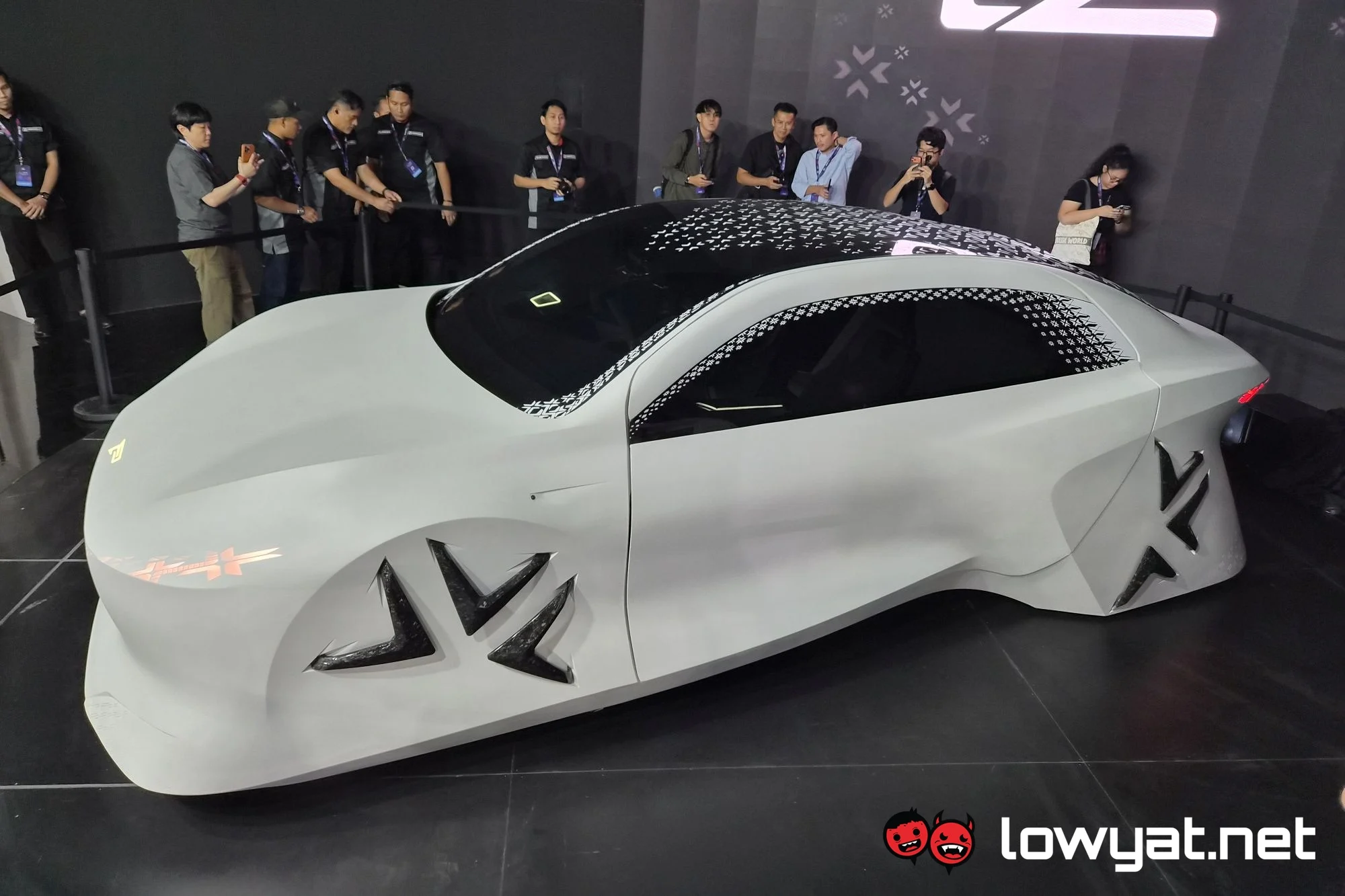
At the KL International Mobility Show, Perodua proudly pulled the covers off its latest creation: the C2 concept. The company called it "Chapter 2" of its electric vehicle journey, a "different styling direction" crafted by "young and talented designers" that would preview the future of Malaysian EVs.
Within hours, the internet had a much shorter description: a gaming mouse on stilts.
Even before we get to the design criticism, let's acknowledge that the C2 wasn't even a real car. It had no wheels.
The entire thing was mounted on stilts, making it a mock-up rather than a functioning prototype. The rear end looked like a shoe heel. The seats resembled office chairs.
But here's the thing: the C2 isn't the problem. The C2 is just a symptom.
The King of the Road
Perodua wasn't always like this. Founded in 1993 as Malaysia's second national carmaker, it carved out a very specific niche: compact, affordable, practical cars for ordinary Malaysians.
The Kancil put the nation on wheels. The Myvi became nothing short of a cultural icon — a car so beloved that it earned the nickname "King of the Road."
For the past 15 years, Perodua has been Malaysia's best‑selling car brand. Out of every 10 cars you see on the highway, four or five will have the P2 badge. It is, by any measure, a dominant force in the local automotive landscape.
But dominance does not equal immunity from criticism. And lately, the public's patience has been wearing thin.
The Myvi That Forgot Its Place
Let's talk about price. The first-generation Myvi launched in 2005 at RM51,300 for the top spec. Sixteen years and four generations later, the top‑spec 2022 Myvi facelift was priced at RM58,000. A price increase of less than RM10,000 over a decade and a half is genuinely impressive. It kept the Myvi within reach of the masses. But in 2026, a new Myvi 1.5 Advance now costs RM59,900.
Meanwhile, the 2026 Proton Saga — a sedan in a similar class — starts at just RM38,990 and tops out at RM49,990. That's a difference of roughly RM10,000 to RM20,000. For B40 and lower‑M40 families.
Perodua built its empire on being the everyman's car. But the everyman is starting to wonder: why is the Myvi becoming so expensive while the Saga stays genuinely affordable?
The QV‑E: A Masterclass in Missing the Assignment
And then came the QV‑E.
The government's vision was clear: develop a national electric car priced below RM100,000, accessible to the masses. The 2022 Budget laid the groundwork with full tax exemptions for EVs, and the expectation was that local automakers would deliver an affordable EV for Malaysian families.
Proton read the assignment. Its eMas 5 starts at RM56,000. That is an EV that an upper‑B40 or M40 household can realistically consider.
Perodua, apparently, was reading a different book altogether. The QV‑E launched at RM80,000 — which sounds questionable already until you realise that price does not include the battery.
The battery is leased separately at RM275 per month for nine years. Total cost over nine years? Around RM112,000 — plus financing interest.
So the headline "EV for the masses" turns into a vehicle that costs more than RM110,000 without even owning the battery outright. For that money, you could upgrade yourself and buy a Proton eMas 7 with the battery included, a warranty, and no monthly rental. Or you could buy a used Myvi and a small plot of land.
The Ferrari Club
Here is where the numbers become almost darkly humorous. According to JPJ registration data, the QV‑E registered zero units in January 2026. Zero.
In February, exactly one car was registered. In March, eleven. By April, cumulative registrations since launch stood at just 64 units. That is for a car that Perodua expected to produce at 500 units per month.
Let me put that in perspective: there are Ferraris in Malaysia with higher sales volumes than the QV‑E. Malaysia's first homegrown electric vehicle, the car that was supposed to lead the nation's EV revolution, is outsold by Italian exotics that cost ten times as much.
Perodua has blamed the slow sales on parts quality issues from Chinese suppliers and has said it deliberately held back production.
But the more honest explanation — the one that consumers have been shouting into the void — is that Malaysian buyers simply do not want to rent a battery for nine years while paying luxury‑car money for a Perodua.
A Brand Identity Crisis
What is happening to Perodua? The company seems to have lost track of who it is. It built its reputation on trust, brand image, and perceived price fairness. It was the brand that families turned to without thinking twice because the value was unquestionable.
Now? The Myvi outpriced itself from Saga territory. The QV‑E is a financial riddle wrapped in an electric motor. And the C2 concept — a wheelless, office‑chair‑filled design study — suggests that Perodua is chasing a futuristic, premium image that its core customer base never asked for.
The Jaguar comparison that someone once made isn't entirely unfair. Jaguar recently attempted a dramatic rebrand that alienated its loyalists without attracting new buyers. Perodua isn't there yet — its conventional models still sell by the thousands — but the direction is worrying. A company that forgets its identity risks becoming irrelevant to both its old customers and its potential new ones.
The Road Ahead
Here is the uncomfortable truth that Perodua's leadership needs to hear. Your traditional buyers are not against EVs. They are not against progress. But they are against bad math. Asking a family to pay RM112,000 over nine years for a car that doesn't even include the battery in the purchase price is not "innovation." It is a miscalculation of what affordable means.
Proton understood this. Its eMas 5 is priced clearly, competitively, and without hidden monthly traps. The result? Over 3,000 units delivered in a single month. The market is there. The demand is there. But the product has to make sense.
Perodua still has time. The brand remains beloved. The Myvi still sells. But the warning signs are flashing. A concept car that people mock. An EV that registers fewer units than Ferraris. A flagship model that costs as much as a luxury car to own.
The King of the Road earned its crown by serving ordinary Malaysians. If it keeps driving in this direction, it may find that the road no longer leads back.
Join the conversation
Comments
Login to join the conversation
No comments yet. Be the first to say something!